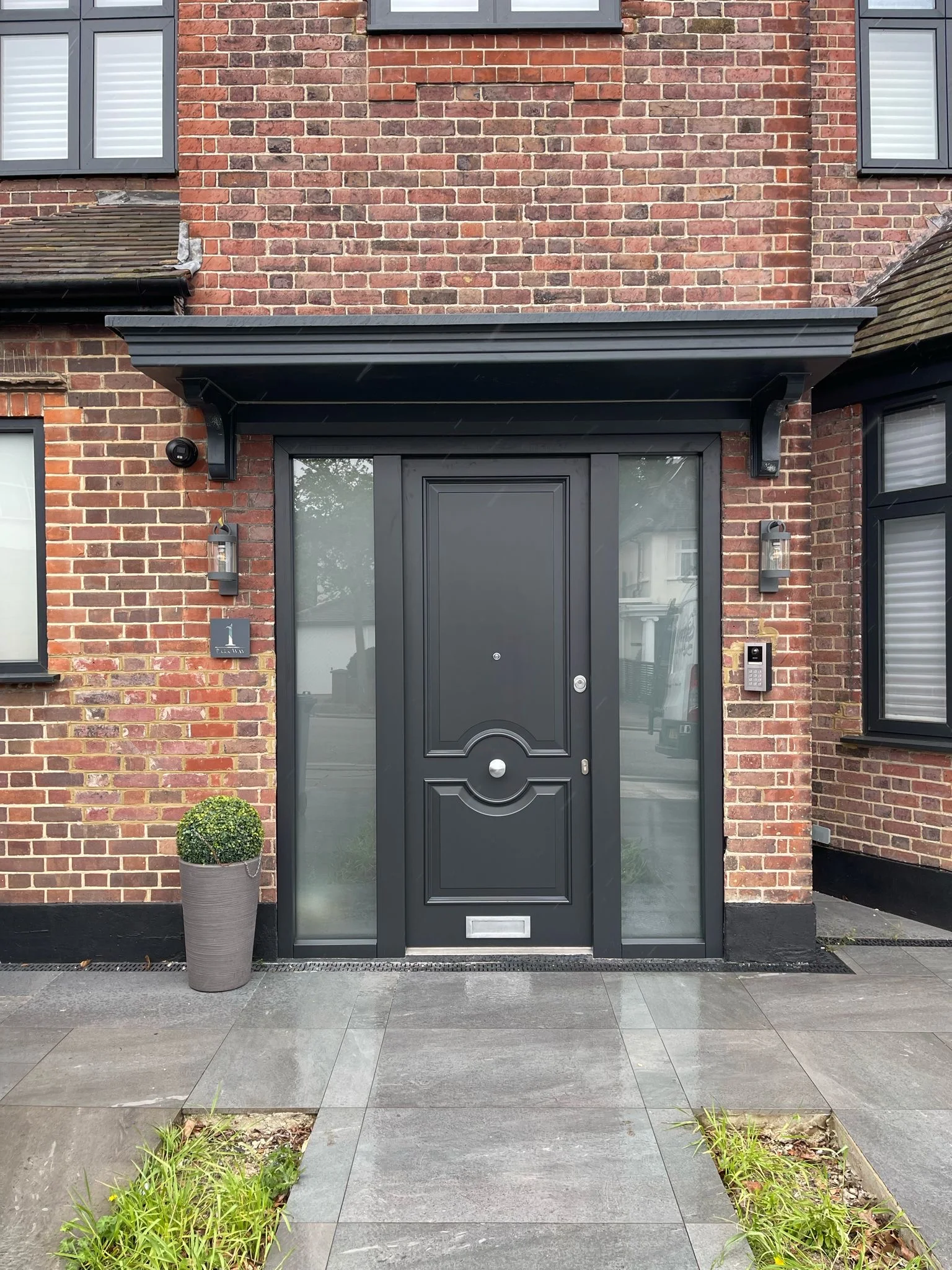
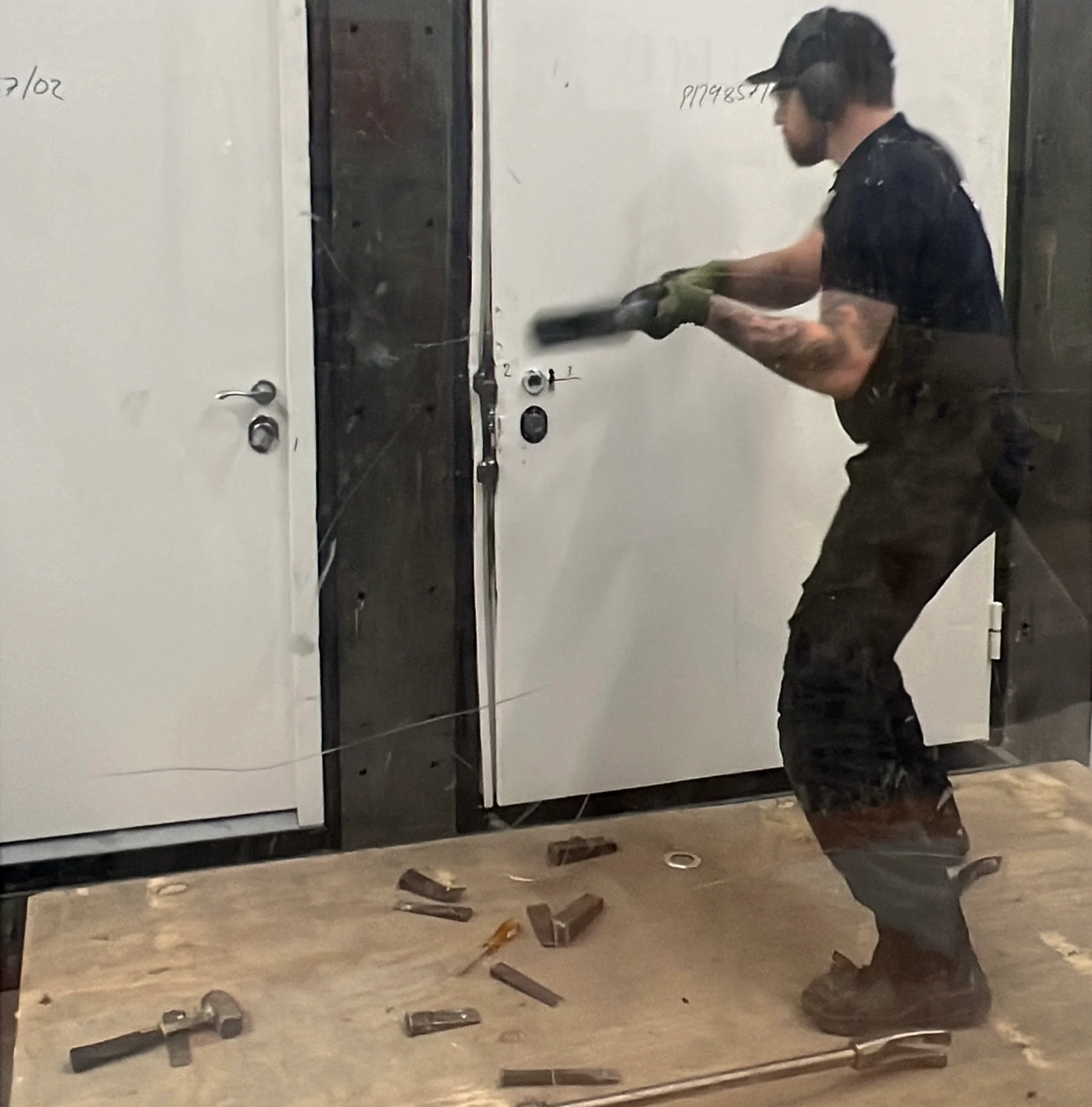
Bullet-resistant security doors provide certified protection against firearm threats while maintaining architectural integration. These doors are engineered using specialised ballistic steel and certified bullet-resistant glazing, combined within a reinforced security door structure.
At Security Doors Factory, bullet-resistant doors are built upon our certified security door platform. We integrate ballistic steel within both the door leaf and frame. As a result, the entire assembly resists ballistic penetration while maintaining structural stability, usability, and design flexibility.
Although demand in the UK remains limited, bullet-resistant doors are widely specified in export markets such as the United States. In these environments, ballistic protection forms part of standard security planning for high-value residential and commercial projects.
What Is a Bullet-Resistant Security Door?
A bullet-resistant security door is a reinforced door assembly designed to resist ballistic attack according to recognised protection standards. Unlike conventional security doors, ballistic doors incorporate specialised steel and glazing engineered to absorb and dissipate projectile energy.
These doors do not rely on surface reinforcement alone. Instead, manufacturers integrate ballistic materials directly into the door leaf, frame, and glazing elements. This approach ensures protection across the entire door system, not just individual components.
Ballistic Steel: The Core Protective Layer
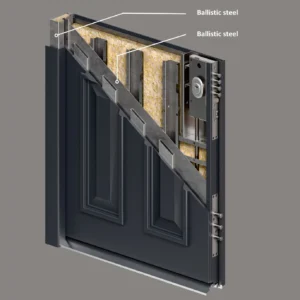
Ballistic resistance depends heavily on the steel structure within the door. Security Doors Factory integrates certified ballistic steel plates within the door leaf and frame to create a continuous protective barrier.
Importantly, these steels provide both hardness and toughness. This combination allows the material to absorb impact energy without brittle failure. As a result, the door maintains its structural integrity even under ballistic attack.
Ballistic steels such as Miilux Protection grades are engineered specifically for human protection applications. These steels achieve extremely high strength and hardness through controlled heat treatment and alloy composition.
For example, according to EN 1522 ballistic classification:
- FB4 protection can be achieved using approximately 3.0 mm ballistic steel, designed to resist .44 Magnum revolver threats.
- FB6 protection typically requires around 6.5 mm ballistic steel, capable of resisting rifle rounds such as 7.62 × 51 mm NATO ammunition.

Bullet-Resistant Glass: Maintaining Visibility and Protection
Where glazing is required, ballistic glass provides protection without compromising visibility. This glass consists of multiple layers of glass and polymer interlayers designed to absorb and dissipate projectile energy.
Ballistic glass is tested according to recognised standards such as BS EN 1063. These classifications define protection levels against specific calibres and ammunition types.
Importantly, “NS” classification means no spall occurs on the protected side. This prevents dangerous glass fragments from entering the protected space.
Typical examples include:
- BR4-NS glass (approximately 22 mm thick), designed to resist handgun threats such as .44 Magnum.
- BR6-NS glass (approximately 37.5 mm thick), designed to resist rifle threats such as 7.62 × 51 mm NATO rounds.
Integrated Door and Frame Protection
Ballistic resistance depends on the complete door assembly, not just individual materials. For this reason, Security Doors Factory integrates ballistic steel within:
The door leaf structure
The perimeter frame
Lock reinforcement zones
Critical hardware mounting points
This ensures there are no weak points within the door system. Consequently, ballistic resistance remains consistent across the entire opening.
This approach builds upon our certified security door platform. You can learn more about the base structure in our Grade 4
Ballistic Protection Levels and Customisation
Bullet-resistant doors can be engineered to different protection levels depending on project requirements.
Typical configurations include:
FB4 protection for handgun threats
FB6 protection for high-powered rifle threats
Higher levels where required for specialised applications
Importantly, ballistic performance depends on both material thickness and complete system design. Steel, glass, frame construction, and hardware integration must work together.
This integrated engineering approach ensures protection without compromising usability or architectural appearance.
Maintaining Architectural Design Flexibility
Bullet-resistant doors do not need to appear industrial or defensive. Modern ballistic materials allow architects to specify doors that match both contemporary and heritage designs.
At Security Doors Factory, ballistic protection integrates within bespoke door designs. External finishes, panelling, and architectural detailing remain fully customisable.
You can view examples of architectural integration in our Security Door Gallery
Conclusion
Bullet-resistant security doors provide critical protection in environments where ballistic threats must be considered. By integrating ballistic steel and certified glazing within a reinforced door structure, these systems deliver reliable protection without compromising architectural design.
Although these doors remain specialised within the UK market, they are widely specified internationally. As security requirements evolve, ballistic protection continues to play an important role in high-security construction.
Frequently Asked Questions
A bullet-resistant security door is a reinforced door designed to resist firearm penetration using ballistic steel and certified glazing.
Common levels include FB4 for handgun protection and FB6 for rifle protection. Higher levels can also be engineered depending on requirements.
Typical ballistic steel thickness ranges from approximately 3 mm for handgun protection to 6.5 mm or more for rifle protection.
Yes. Certified ballistic glass provides protection while maintaining visibility. Thickness varies depending on protection level.
Yes. Modern ballistic doors can be fully customised to match architectural design while maintaining certified protection.