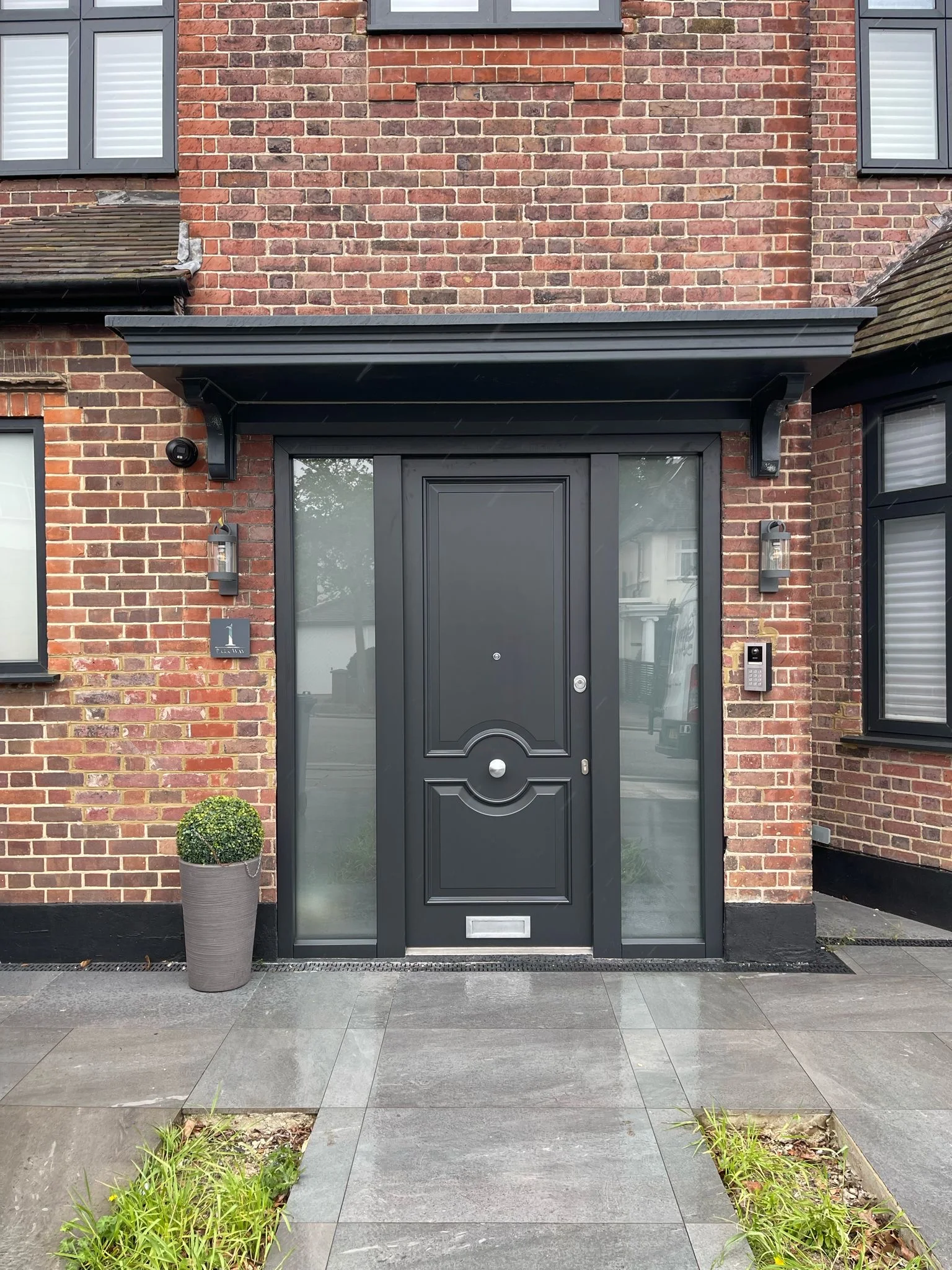
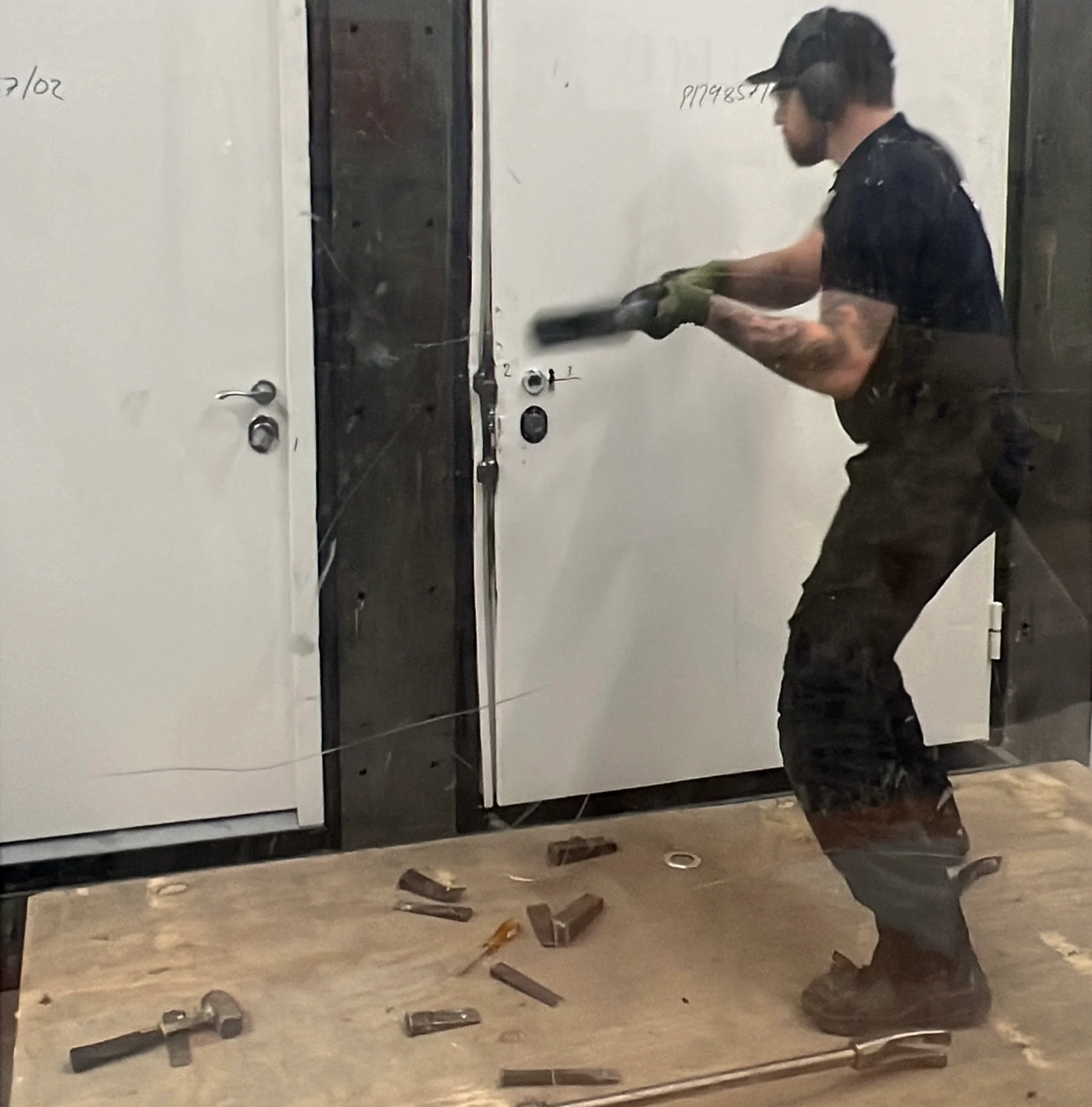
Ballistic door ratings define how well a security door resists firearm threats under certified test conditions. These ratings specify the exact calibres, ammunition types, and impact conditions that door assemblies must withstand.
Security professionals use classifications such as FB4, FB6, BR4, and BR6 to define ballistic protection levels for steel and glazing. These classifications allow architects, developers, and security consultants to specify protection based on clearly defined threat levels.
At Security Doors Factory, we manufacture bullet-resistant security doors using certified ballistic steel and glazing integrated within reinforced door structures. This ensures the entire assembly provides consistent ballistic protection.
What Are Ballistic Door Ratings?
Ballistic door ratings are defined under recognised international standards. In Europe, protection levels are specified under EN 1522 for doors and steel, and EN 1063 for glazing.
In the United States, ballistic resistance is commonly classified under UL 752, the primary standard used to evaluate bullet-resisting equipment including doors, panels, and glazing.
Additionally, ballistic protection is defined in government guidance such as NIJ Standard 0108.01, developed by the National Institute of Justice to classify ballistic-resistant materials used in security applications.
These standards define protection levels based on:
- firearm type
- projectile calibre
- velocity
- number of impacts
- impact spacing
This ensures ballistic performance is measurable, repeatable, and independently verified. You can learn more about complete door construction in our bullet-resistant security doors overview
Understanding FB Ratings: Ballistic Steel and Door Structure
FB ratings apply to complete door assemblies and ballistic steel components. These ratings are defined under EN 1522 and evaluate resistance against ballistic attack.
Ballistic steel forms the primary protective barrier within the door leaf and frame. This steel absorbs and dissipates projectile energy, preventing penetration.
FB4 Ballistic Rating
FB4 protection is designed to resist handgun threats, including high-energy revolver rounds such as .44 Magnum.
Ballistic steels engineered for this purpose typically require thickness around 3.0 mm, depending on steel grade and system design. Certified ballistic steels such as Miilux Protection grades achieve these performance levels through controlled hardness and structural strength.
FB4 protection is commonly specified in residential security doors, executive housing, and commercial security applications.
FB6 Ballistic Rating
FB6 protection provides significantly higher ballistic resistance. It is designed to resist rifle threats, including 7.62 × 51 mm NATO ammunition.
Achieving FB6 protection typically requires ballistic steel thickness around 6.5 mm, combined with reinforced door structure and frame integration.
Because rifle projectiles carry significantly greater energy, the entire door assembly must be engineered to distribute impact forces safely. This level of protection is widely specified in diplomatic buildings, secure residential properties, and high-security commercial environments.
Understanding BR Ratings: Ballistic Glass Protection
BR ratings apply specifically to ballistic glazing and are defined under EN 1063.
Ballistic glass consists of multiple laminated layers designed to absorb and dissipate projectile energy while maintaining structural integrity.
BR4 Ballistic Glass Rating
BR4 glazing protects against handgun threats such as .44 Magnum rounds. This protection level typically requires glass thickness around 22 mm, depending on construction and manufacturer specifications.
This glazing is commonly used in residential ballistic doors and commercial security installations.
BR6 Ballistic Glass Rating
BR6 glazing provides significantly higher protection and is designed to resist rifle threats such as 7.62 × 51 mm NATO ammunition.
This protection level typically requires glazing thickness around 37.5 mm, with multi-layer laminated construction.
Importantly, BR6 glazing prevents projectile penetration and protects occupants from secondary fragmentation.

Ballistic Protection in US Government and High-Security Buildings
Ballistic-resistant doors are widely used in government and high-security facilities. In the United States, ballistic protection forms part of federal building security standards defined by the General Services Administration (GSA).
These standards require door assemblies to resist both forced entry and ballistic attack, ensuring comprehensive physical security.
This approach reflects the growing importance of ballistic-resistant construction in modern security planning.
Why Steel and Glass Ratings Must Match
Ballistic protection depends on the performance of the entire door assembly. Weak points can compromise overall resistance.
For example:
FB6 steel combined with BR4 glass creates a vulnerability
FB4 steel combined with BR6 glass creates structural imbalance
Therefore, steel and glazing must provide equivalent protection levels.
This integrated approach ensures consistent ballistic resistance across the entire door system.
You can learn more about reinforced door construction in our Grade 4 security doors
Choosing the Correct Ballistic Protection Level
The appropriate ballistic rating depends on threat level, building type, and project requirements.
Typical applications include:
FB4 / BR4:
residential ballistic doors
executive housing
commercial buildings
FB6 / BR6:
high-risk residential properties
diplomatic buildings
high-security facilities
Security consultants typically define protection levels during early design stages.
Conclusion
Ballistic door ratings such as FB4, FB6, BR4, and BR6 provide certified protection against defined firearm threats. These standards allow architects and security professionals to specify door systems based on measurable performance.
By integrating certified ballistic steel and glazing within reinforced door structures, manufacturers can deliver reliable protection without compromising architectural design.
As ballistic protection becomes increasingly important in global security planning, understanding these ratings allows trade partners to specify security doors with confidence.
Ballistic ratings referenced in this article relate to independently tested systems in accordance with EN 1522 and EN 1063. The performance of a doorset depends on full system testing. Security Doors Factory products incorporate ballistic-rated materials, and system certification is provided where applicable.
Frequently Asked Questions
FB4 means the door can resist handgun threats such as .44 Magnum rounds under certified testing conditions.
FB6 means the door provides protection against rifle threats such as 7.62 × 51 mm NATO ammunition.
BR4 and BR6 refer to ballistic glass protection levels that correspond to handgun and rifle threats respectively.
Yes. The US uses standards such as UL 752 and NIJ 0108.01, while Europe uses EN 1522 and EN 1063.
Yes. Many ballistic doors also provide forced-entry resistance when engineered to standards such as LPS 1175.