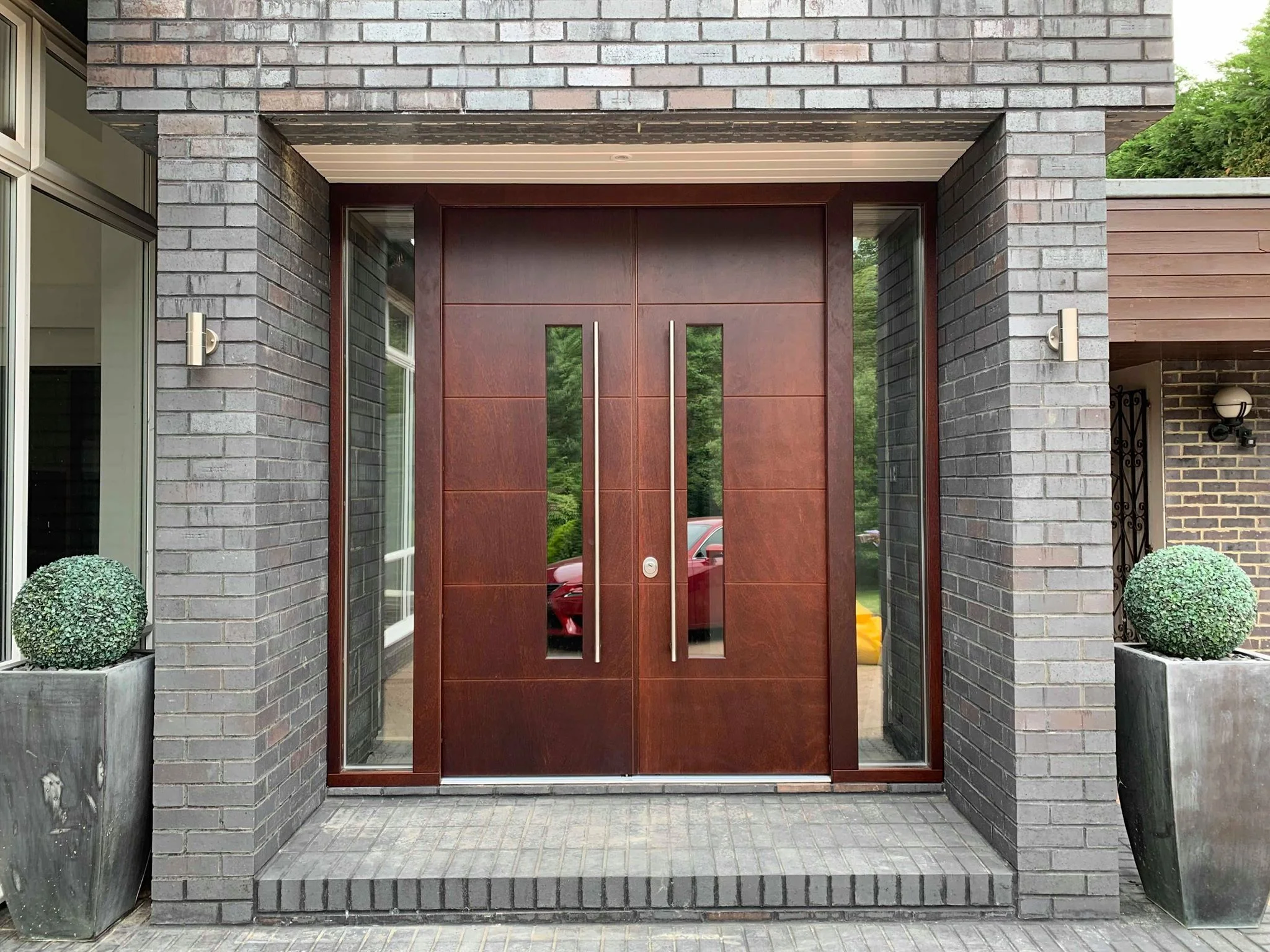
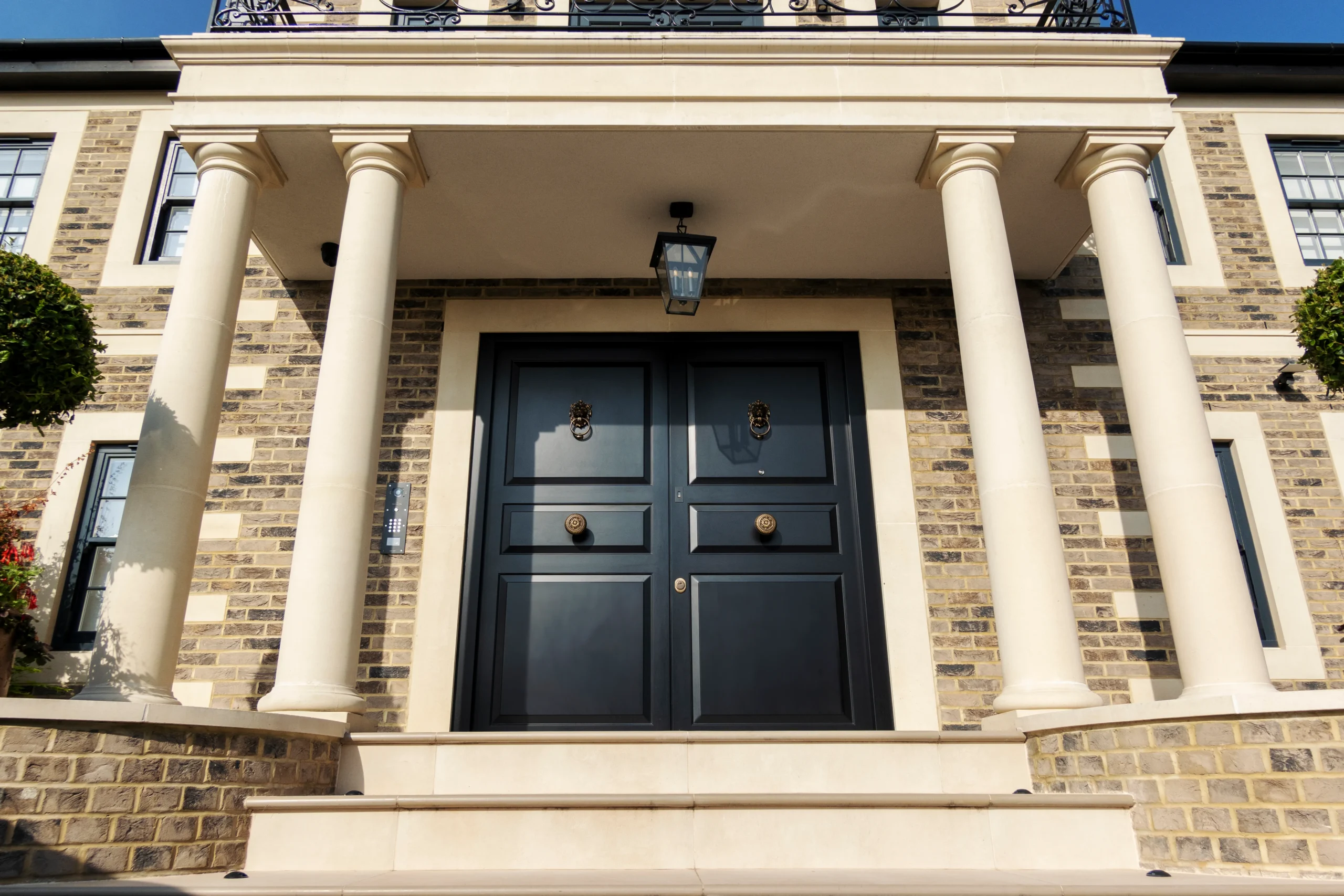
Bespoke security doors for architects require more than aesthetic flexibility. They must integrate into architectural drawings, comply with security certification standards, and maintain precise tolerances during construction and installation.
Architectural projects depend on accurate documentation and coordinated specification. Therefore, security doors must be engineered as part of the building system rather than supplied as standard products. At Security Doors Factory, we support trade partners working with architects by providing detailed CAD and DWG coordination, allowing the door design to be incorporated directly into project drawings.
Through this approach, architectural intent aligns with certified security door construction from the earliest design stage.
CAD Integration and Technical Coordination
Architects typically develop building designs through CAD and BIM modelling. As a result, security doors must be represented accurately within technical drawings.
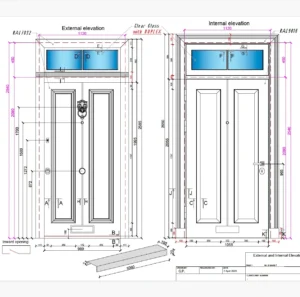
Security doors differ significantly from standard decorative doors. Their reinforced steel cores and structural frames create greater depth and require specific fixing strategies. When these elements are incorporated into CAD files early in the design process, architects can visualise the complete door assembly within the surrounding wall structure.
SDF regularly exchanges CAD and DWG files with resellers and architectural teams. These drawings define door leaf thickness, steel cassette construction, hinge reinforcement zones, fixing bolt positions, and frame build-ups. Consequently, architects gain a clear understanding of how the door integrates within the building envelope.
You can see how these structural elements combine in our How Our Security Doors Are Made page.
Managing Tolerances in Security Door Specification
Security doors operate within tighter tolerances than conventional joinery. Lock engagement, compression seals, and hinge reinforcement all rely on dimensional precision.
For this reason, architects must consider structural openings, anchoring depth, and floor finish allowances when specifying doors. Even small variations can affect locking alignment or frame positioning. When tolerances are incorporated into drawings at an early stage, installation remains consistent with the tested configuration.
This is particularly important for certified doors tested under standards such as LPS 1175, where the complete assembly must match the tested construction.
Early coordination ensures the installed door maintains the same structural performance demonstrated during certification testing.
Compliance and Security Certification
Architects must also consider regulatory compliance when specifying security doors. In residential developments, Approved Document Q requires doors to provide resistance against unauthorised entry.
Higher levels of protection may require certification under standards such as LPS 1175 or equivalent forced-entry resistance testing.
When security doors are engineered specifically for a project, manufacturers can align structural design with certification requirements from the outset. This allows compliance documentation to be incorporated into the architectural specification.
Our Grade 3 security doors demonstrate how certified performance integrates with bespoke manufacturing
Heritage Replication and Conservation Projects
Security upgrades are increasingly required in heritage buildings and conservation areas. However, maintaining historical character remains essential.
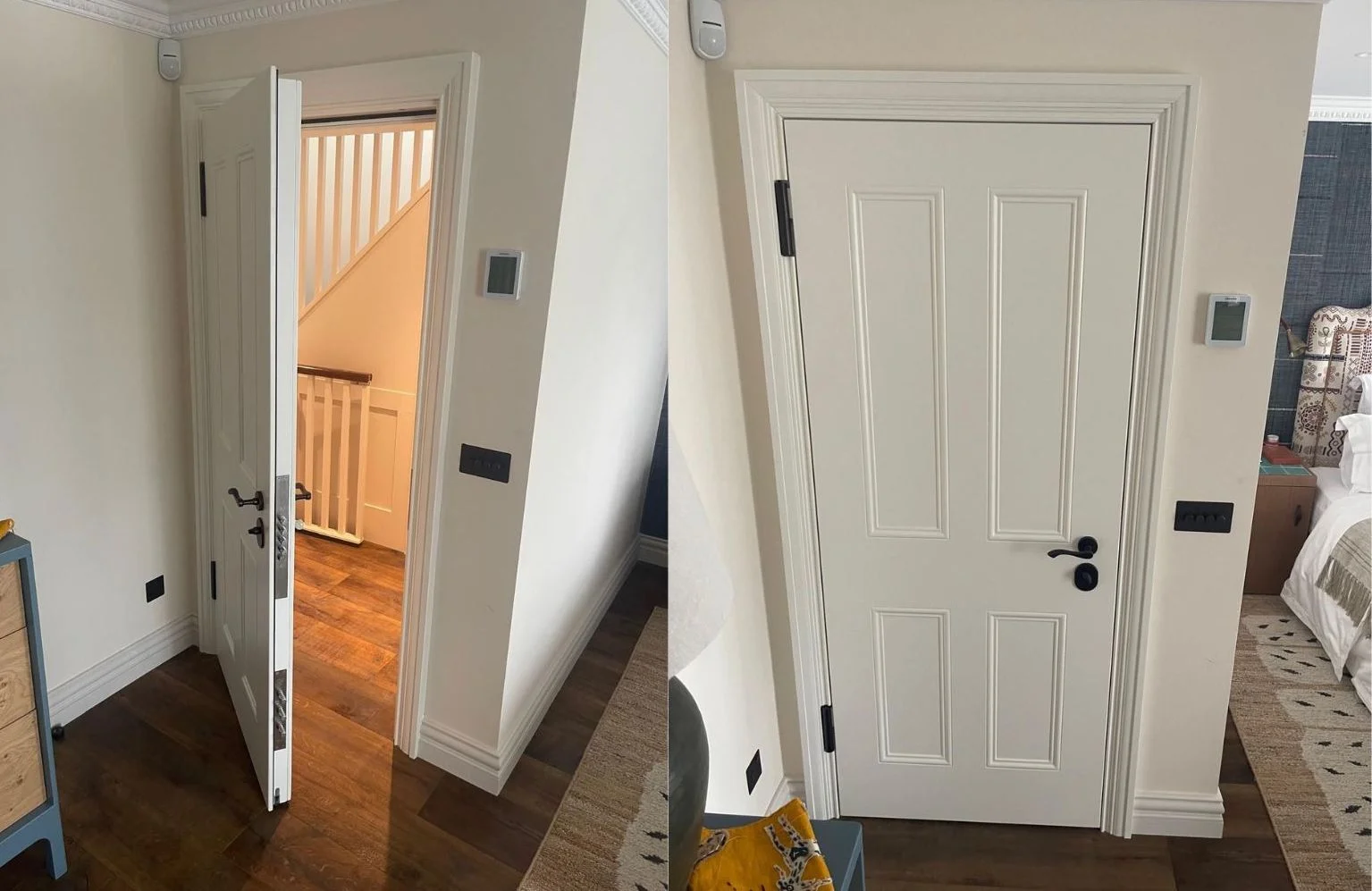
Bespoke manufacturing allows architects to replicate traditional door proportions, panel mouldings, and architraves while integrating modern security structure behind the visible design. This approach ensures reinforced steel cores and certified locking systems remain hidden within historically accurate profiles.
Guidance from Historic England highlights the importance of retaining or replicating the original appearance of doors when upgrading heritage properties.
Through careful detailing and accurate machining, bespoke security doors can meet both conservation requirements and modern security expectations. More about this can be read on this article.
Collaboration with Trade Partners
Security Doors Factory operates exclusively as a manufacturer supplying trade partners such as resellers, contractors, and project specialists. We do not supply directly to the public.
This structure allows professional installers and architectural teams to coordinate specification, installation, and certification requirements throughout the project lifecycle.
Conclusion
Bespoke security doors for architects require precise coordination between design, engineering, and compliance. CAD integration, tolerance management, and certification alignment ensure the door performs as intended once installed.
When manufacturers engage early in the design process, security doors become an integrated architectural component rather than a late-stage addition.
Frequently Asked Questions
They are custom-engineered security doors designed to integrate directly into architectural drawings and building specifications.
Yes. Professional manufacturers provide CAD or DWG drawings that show door thickness, fixing points, and structural details and , importantly, incorporate architect’s detailing
Because reinforced doors rely on precise alignment for locking engagement, sealing, and certification compliance.
Yes. Replica detailing allows historic designs to be reproduced while integrating modern security structure.
When correctly specified, they can comply with security standards such as LPS 1175 and Approved Document Q.