Custom security doors vs off-the-shelf security doors is a comparison many architects and developers face when selecting entrance security solutions. While both aim to provide protection, they are engineered for very different purposes.
Off-the-shelf security doors are manufactured in standard dimensions for general applications. Custom security doors, on the other hand, are designed and built specifically for a project’s structural opening, architectural requirements, and security specifications.
For architects, developers, and professional installers, understanding these differences is essential when selecting the correct door solution.
Structural Engineering and Door Construction
The most fundamental difference lies in how the doors are engineered.
Off-the-shelf security doors are typically produced in fixed sizes using standardised components. Manufacturers design them to fit common residential openings, which makes them efficient to produce but limits adaptability.
Custom security doors are engineered differently. They are manufactured to match the exact structural opening and project specification. This allows the reinforced steel core, door leaf thickness, and frame construction to align precisely with the building structure.
Industry guidance from the Steel Door Institute highlights that properly engineered steel door assemblies provide long-term structural stability and resistance against forced entry when designed as complete systems rather than generic products.
Because custom security doors are built around the project rather than adapted later, they integrate more reliably with the surrounding construction.
You can see how this engineering approach works in our How Our Security Doors Are Made page.
Architectural Design Flexibility
Off-the-shelf doors are usually designed around manufacturing efficiency. As a result, the number of available panel layouts, glazing options, and proportions is often limited.
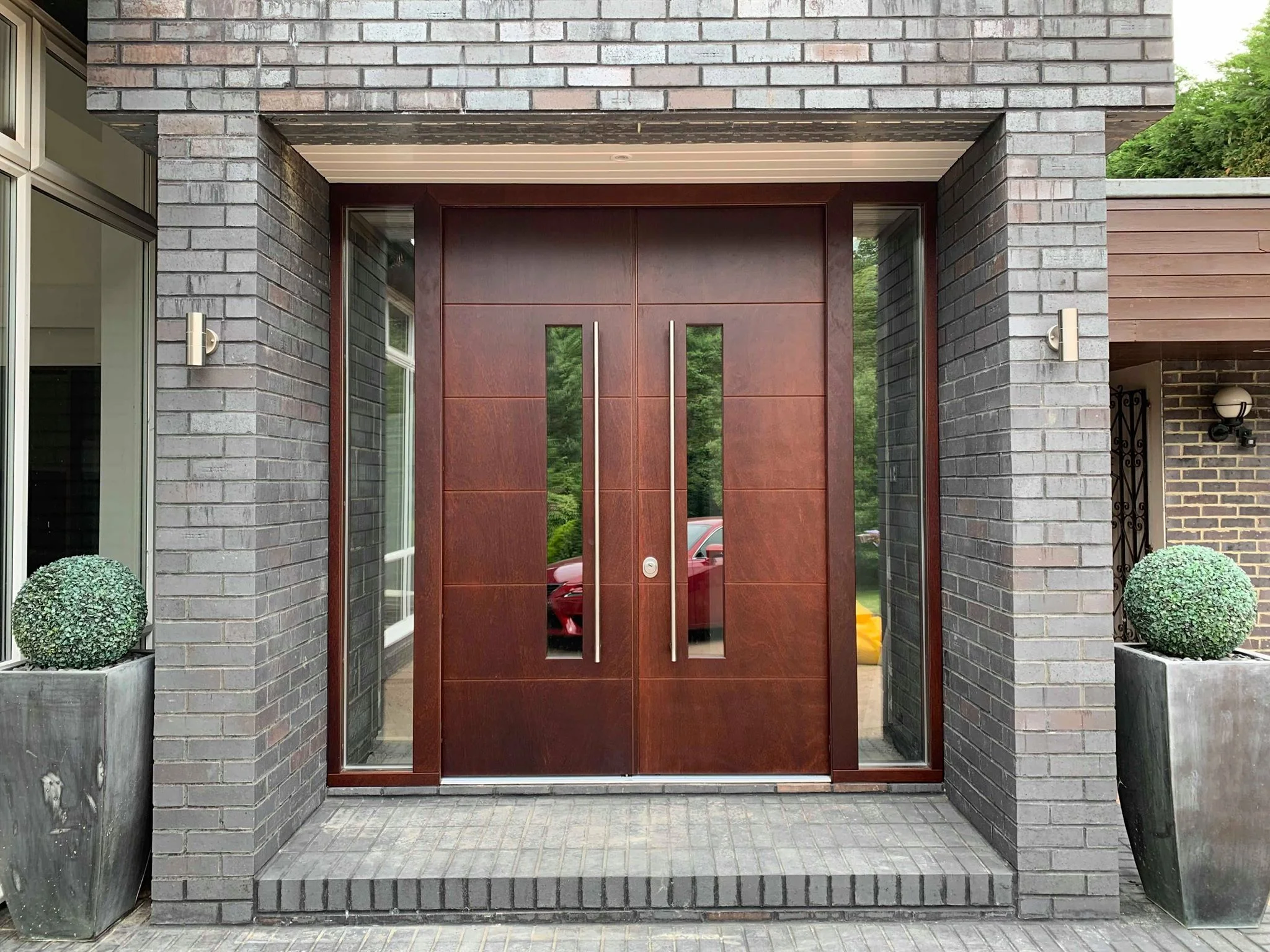
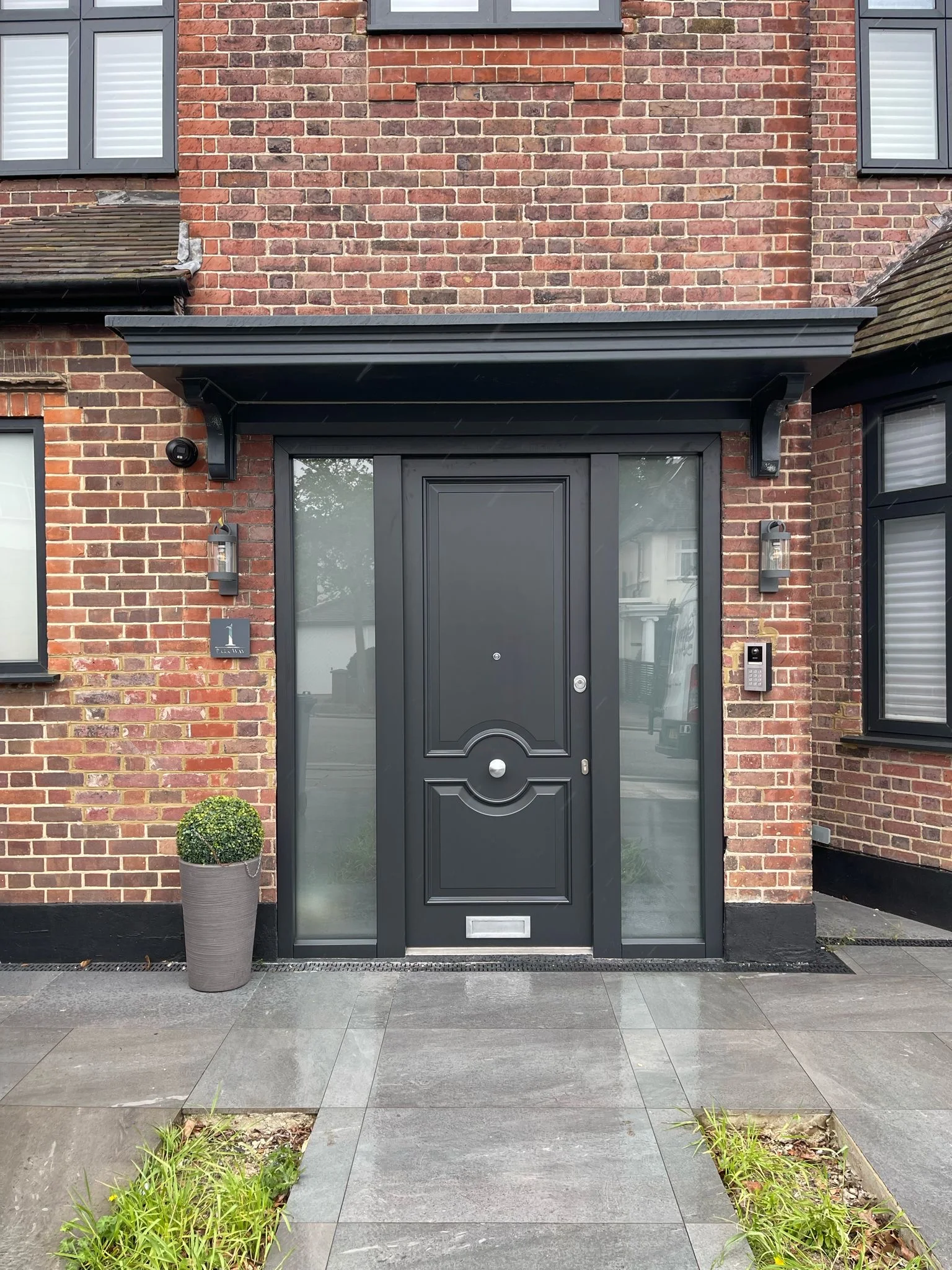
Custom security doors provide significantly greater design flexibility. Architects can define door proportions, panel geometry, glazing placement, and external finishes to match the building design.
This capability becomes particularly valuable in high-end residential projects or heritage properties where maintaining architectural consistency is essential.
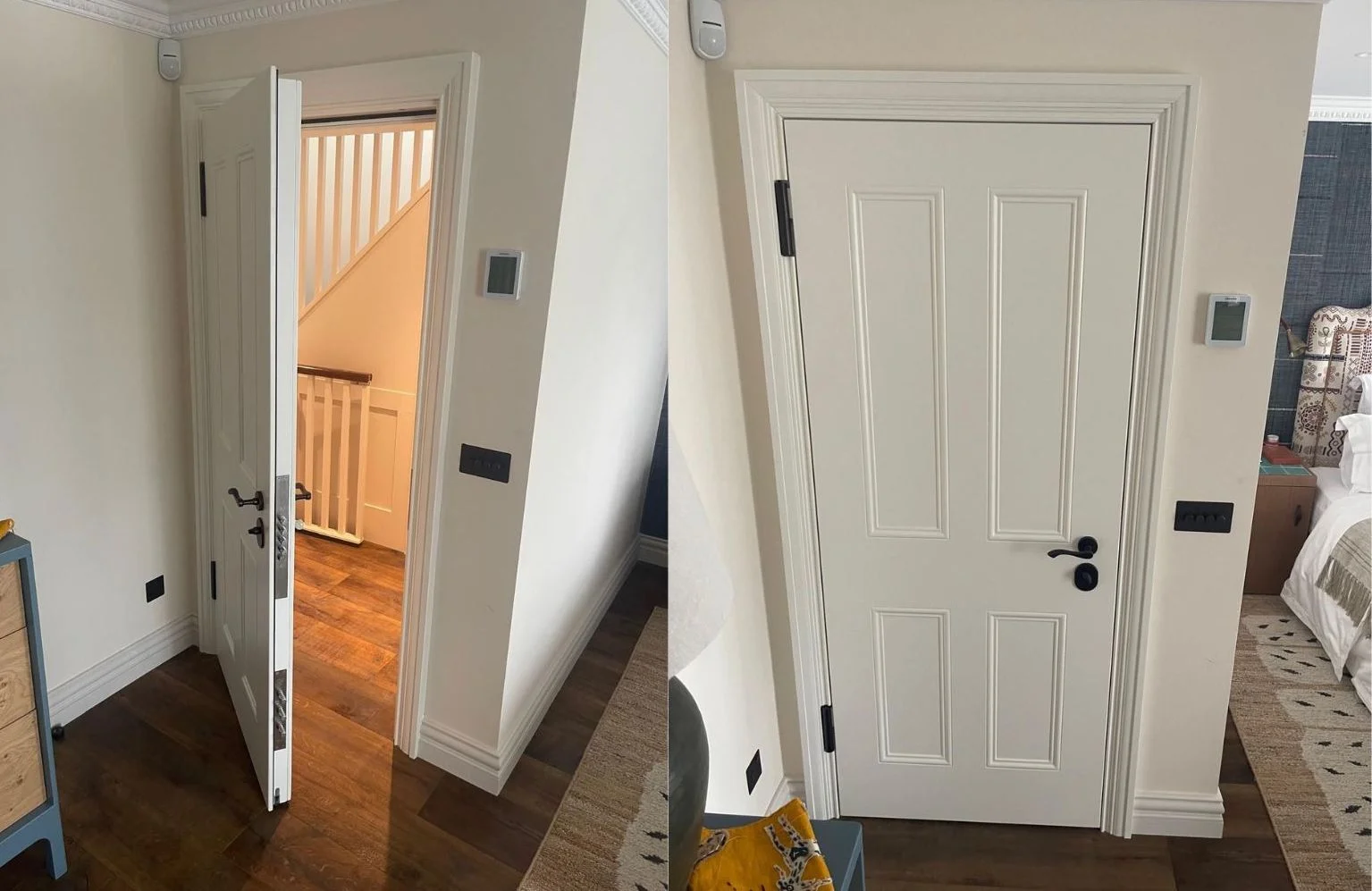
Examples of bespoke security door designs can be seen in our Security Door Gallery
Integration of Advanced Security Features
Another advantage of custom security doors is the ability to integrate advanced security systems directly into the door structure.
Instead of adding security features as accessories, manufacturers can incorporate them within the engineered design. This may include multi-directional locking systems, reinforced hinge engagement, ballistic materials, or biometric access systems.
Security initiatives such as the UK police-backed Secured by Design programme also highlight the importance of tested and certified door assemblies in reducing burglary risk within residential developments.
When security features are integrated from the design stage, the overall door system performs more reliably.
Long-Term Value and Project Integration
Off-the-shelf security doors can provide a convenient solution for standard openings. However, projects that require certification, architectural accuracy, or specialised security often benefit from bespoke manufacturing.
Custom security doors allow structural engineering, regulatory compliance, and design intent to be coordinated within a single solution. This alignment often leads to improved durability, better installation outcomes, and stronger architectural integration.
For developers and architects, this approach ensures security doors function as part of the building system rather than as separate components
Conclusion
Custom security doors provide engineered solutions tailored to specific architectural and structural conditions. Off-the-shelf doors can offer basic protection, but they typically lack the flexibility and integration required for more complex projects.
Where certification, precision engineering, and architectural design all matter, bespoke security doors provide clear advantages.
Certifications That Sell: LPS 1175 SR3 & Beyond
When it comes to security doors, certification is the benchmark clients trust.
- LPS 1175 SR3 accreditation: Demonstrates that a door can withstand sustained, tool-based attacks. Already recognised by insurers, architects, and security consultants as a serious level of protection.
By aligning with products tested and certified to these standards, retailers gain immediate credibility and an edge over competitors.
Frequently Asked Questions
Custom security doors are manufactured for specific openings and project requirements, while off-the-shelf doors are produced in standard sizes.
They often provide better structural integration because they are designed around the building’s construction and security requirements.
Some do, but modifying them to fit non-standard openings can affect certification integrity.
Because bespoke doors integrate directly into architectural drawings and allow precise design coordination.
Yes. Bespoke manufacturing allows integration of multi-point locking systems, ballistic materials, and electronic access technologies.