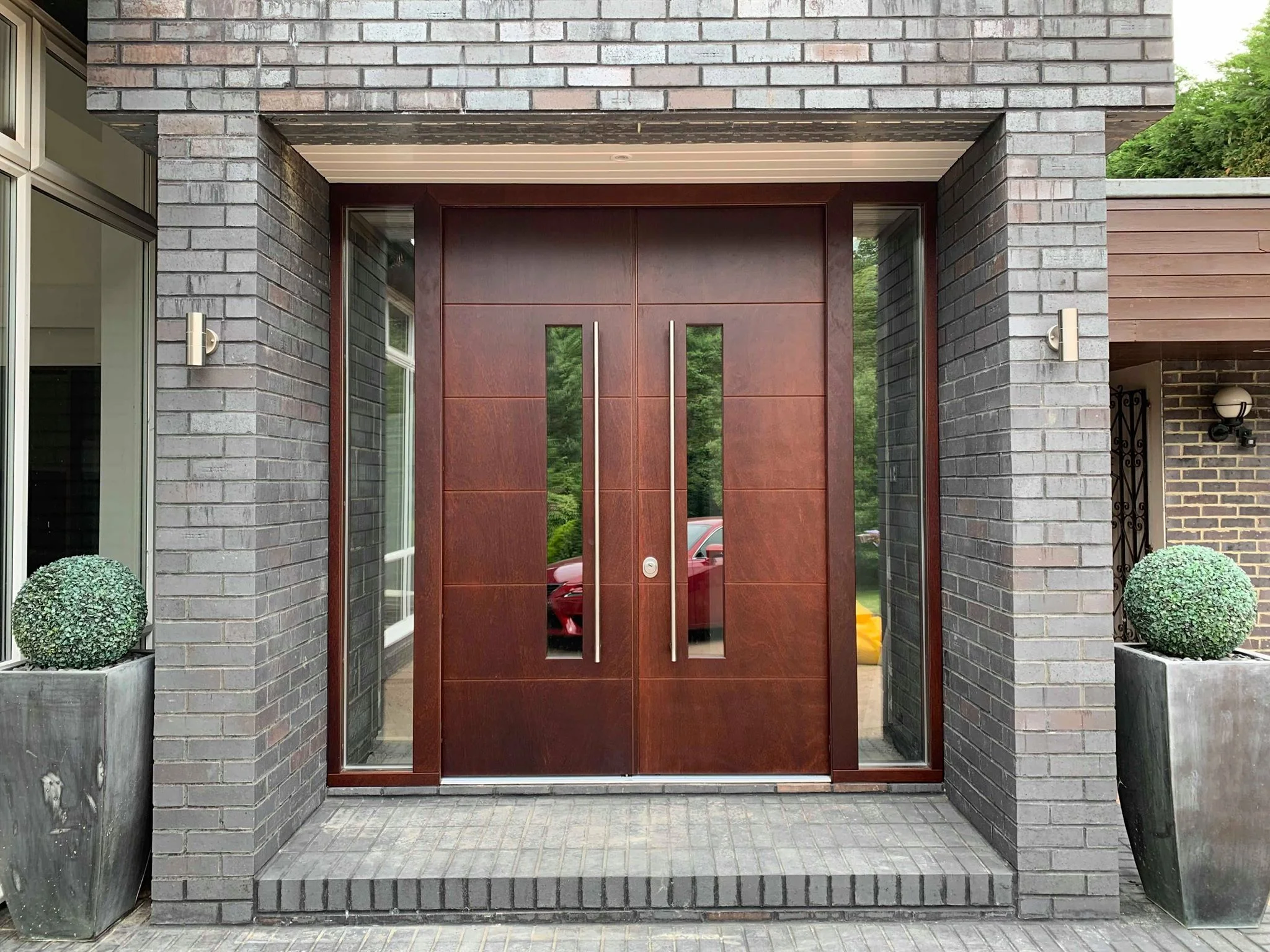
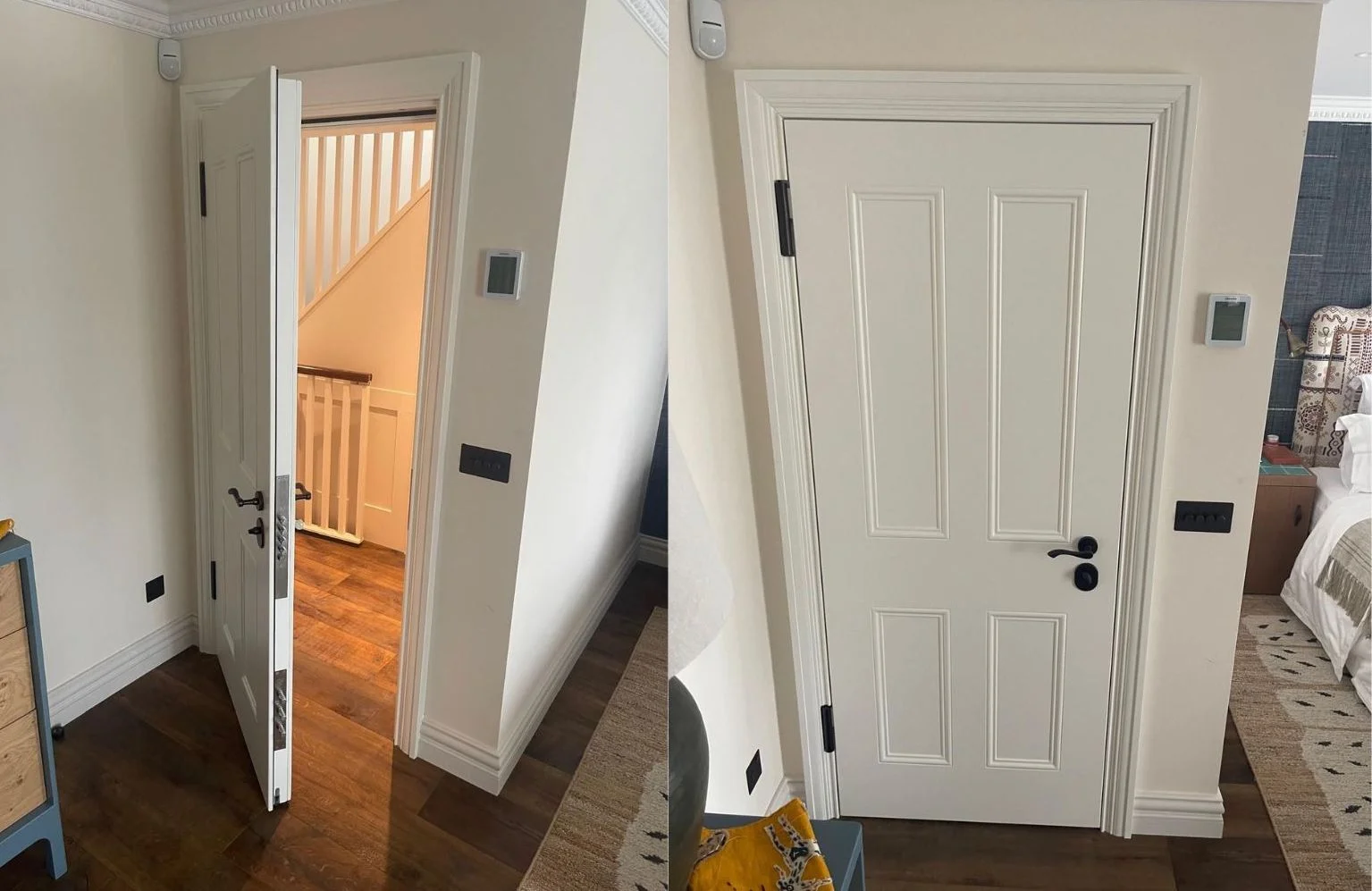
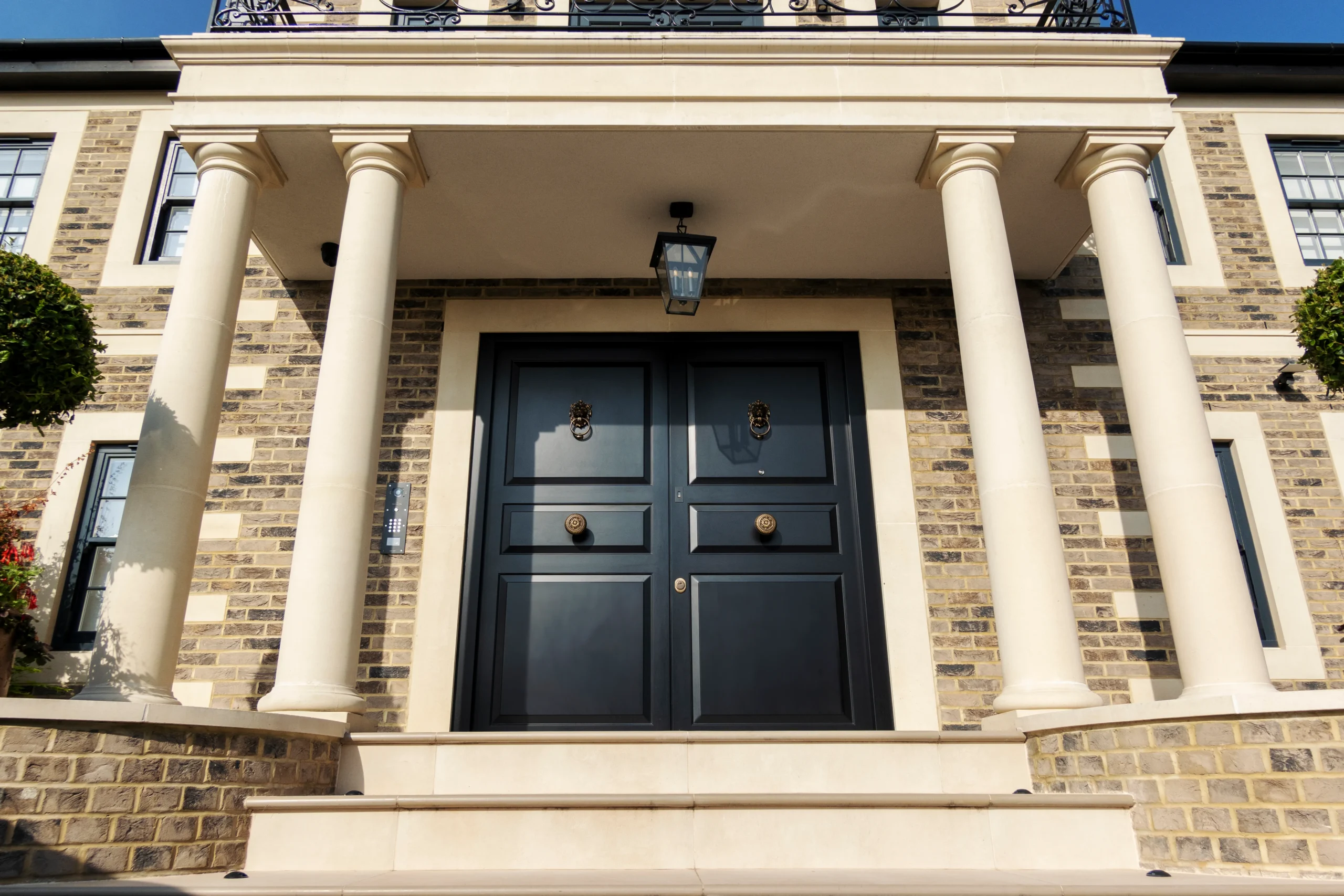
In Medite Tricoya Extreme security doors, strength alone is not enough. Long-term durability, dimensional stability, and design flexibility are equally critical, particularly in heritage, coastal, and high-exposure environments.
Engineers develop Medite Tricoya Extreme as an acetylated wood panel for exterior durability and long-term dimensional stability in security door applications. At Security Doors Factory, it plays a central role in delivering doors that retain both performance and appearance over decades of use.
Every SDF door is built around two core materials: galvanised steel for structural security and Medite Tricoya Extreme for external detailing. Together, they allow certified performance to coexist with refined architectural design.
What Is Medite Tricoya Extreme?
Medite Tricoya Extreme is an engineered wood panel produced through a controlled acetylation process. This process permanently modifies the wood’s cell structure, significantly reducing moisture absorption and biological degradation.
As a result, Tricoya resists swelling, shrinking, and decay in environments that would compromise conventional timber. According to the manufacturer’s published performance data, the material is suitable for applications traditionally limited to concrete, plastics, or metals, while retaining the workability of wood.
This unique combination makes it particularly suitable for high-performance exterior security doors.
Why Do Security Doors Use Tricoya?
Security doors rely on precise tolerances for locking engagement, engagement, sealing, and long-term reliability, therefore, material stability becomes critical. Even minor material movement can affect alignment, compression, and resistance performance.
Medite Tricoya Extreme provides exceptional dimensional stability in exposed and high-moisture environments. This stability helps maintain consistent clearances, panel geometry, and junction detailing throughout the door’s service life. In practical terms, it supports both usability and certified performance.
The material’s durability is further supported by long-term warranties of up to 50 years above ground and 25 years in ground contact.
Supporting Certified Security Performance
In professionally specified security doors, materials must perform consistently under mechanical stress and environmental exposure. Warping, distortion, or surface degradation can undermine locking systems and reduce resistance to attack.
By maintaining stable dimensions over time, Tricoya helps preserve the integrity of multipoint locking systems, frame interfaces, and security seals. This consistency supports forced-entry testing outcomes and reduces long-term maintenance requirements.
You can see how material stability supports certified performance in our LPS 1175 SR3 security doors.
Enabling Heritage Accuracy and Bespoke Detailing
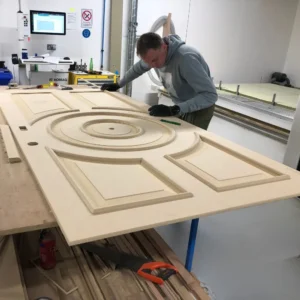
One of Tricoya’s key advantages is its ability to support precise machining and deep profiling. This allows SDF to produce bespoke doors, architraves, and replica components that accurately reflect historic joinery.
Panel mouldings, raised details, shadow lines, and traditional proportions can be recreated without the instability associated with natural timber. This capability is particularly valuable in listed buildings and conservation areas, where visual accuracy is mandatory.
Historic England guidance consistently highlights the importance of retaining or replicating original appearance when upgrading doors in historic buildings.
Thickness Selection and Performance
ASDF specifies Tricoya in 12 mm, 18 mm, and 24 mm thicknesses, depending on design intent and door configuration.
Thinner boards are typically used for overlays, mouldings, and fine detailing. Thicker sections are selected for deeper profiling, panel construction, and enhanced visual weight. This flexibility allows Tricoya to support both contemporary designs and heavily detailed heritage doors.
Regardless of thickness, the material delivers consistent durability and dimensional stability throughout its service life.
How Tricoya Compares to Conventional Timber
Unlike untreated hardwood or softwood, Tricoya does not rely on surface coatings alone for protection. Its durability is inherent to the material itself.
As a result, it is far less susceptible to moisture-related movement, biological decay, and long-term distortion. This makes it more suitable for security doors, where structural consistency directly affects performance.
Sustainability Without Compromise
Medite Tricoya Extreme is manufactured using sustainably sourced timber. The acetylation process extends material lifespan, reducing replacement cycles and lifecycle environmental impact.
For architects and developers, this supports sustainability objectives without compromising durability or performance. It also aligns with growing expectations around responsible material specification in high-value developments.
Tricoya as Part of a Complete Door System
While Tricoya delivers durability and design freedom, SDF always integrates Tricoya as part of a complete security door system. Behind the external detailing sits a reinforced galvanised steel core and frame that provide structural strength and attack resistance.
This layered construction ensures that aesthetic flexibility never undermines security performance.
To understand how these materials are engineered together, see How Our Security Doors Are Made.
Conclusion
Medite Tricoya Extreme enables a level of durability and design freedom that conventional timber cannot achieve. When combined with a reinforced steel core, it allows security doors to perform structurally while remaining visually accurate and stable over decades.
For architects and specifiers working in demanding environments, Tricoya provides a reliable, future-proof material solution at the heart of modern security door design.
Frequently Asked Questions
It provides exceptional durability and dimensional stability, helping maintain locking tolerances, detailing accuracy, and long-term performance.
Tricoya carries warranties of up to 50 years above ground and 25 years in ground contact, making it suitable for long-term exterior use.
Yes. It can be precisely machined to replicate historic panel profiles, mouldings, and joinery details required in listed and conservation buildings.
SDF typically uses 12 mm, 18 mm, and 24 mm boards depending on design, detailing depth, and door configuration.
No. Tricoya provides durability and design flexibility, while galvanised steel provides structural strength and security performance. Both materials are essential.