In high-security door manufacturing, material choice is not a cosmetic decision. It defines strength, durability, and the ability to meet recognised security standards. For this reason, steel security door construction remains the foundation of professionally specified security doors across the UK and international markets.
At Security Doors Factory, every door is built around a galvanised steel core and frame. This structure provides the strength required for certified performance, while also supporting bespoke design, architectural detailing, and long-term reliability.
Why Steel Is the Backbone of a Security Door
Security doors are expected to resist sustained, targeted attack. Materials such as timber, aluminium, or composites alone cannot deliver this level of performance. Steel, by contrast, provides predictable structural behaviour under load, impact, drilling, and levering.
Because of this, steel is widely recognised as the primary material used in certified security door systems. Guidance from certification bodies such as BRE / LPCB reflects this systems-based approach, where the door leaf and frame must act together as a reinforced unit rather than as decorative components.
Galvanised Mild Steel: The SDF Core Structure
Every SDF security door is built around a galvanised mild steel core, forming both the reinforced cassette and the full door leaf sheet. The frame is also manufactured from galvanised steel, ensuring consistent strength across the entire opening.
Galvanisation protects the steel from corrosion, making it suitable for demanding environments, including exposed residential entrances and mixed-use developments. This durability allows us to offer a 10-year warranty on the steel core and frame, reflecting confidence in the structural integrity of the system.
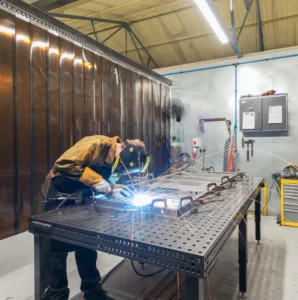
Steel Thickness and Security Performance
Not all steel performs the same function in a security door. At SDF, steel thickness is selected based on the security level and the role of each component.
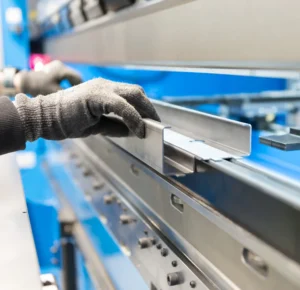
We typically use 1.5 mm and 2 mm galvanised steel, depending on whether the steel is forming the door leaf, reinforcing high-risk areas, or supporting frame interfaces. Thicker steel is introduced where attack resistance, load distribution, or certification requirements demand it.
This targeted use of steel allows the door to remain structurally efficient without unnecessary weight, while still delivering resistance where it matters most.
Steel as a System, Not a Single Component
A common mistake in security door design is treating steel as an insert rather than as a system. In contrast, SDF designs the steel core, door leaf, and frame to work together as a single structural assembly.
This approach is critical during forced-entry testing, where attackers are permitted to target locks, edges, hinges, and central areas independently. Guidance from the National Protective Security Authority (NPSA) reinforces the importance of system-level resistance rather than reliance on individual components.
By engineering the steel structure holistically, the door behaves predictably under attack and maintains integrity across all critical zones.
Supporting Certification and Compliance
Steel construction plays a central role in achieving forced-entry certifications such as LPS 1175. Certification requires the door assembly to resist attack over multiple test areas, using controlled tools and defined working times.
Without a reinforced steel core and frame, consistent performance across these attack zones would not be achievable. This is why steel remains fundamental to security door certification and why it continues to be specified in higher-risk and higher-value projects.
You can see how steel construction supports certified performance in our LPS 1175 SR3 security doors.
Steel and Design Freedom
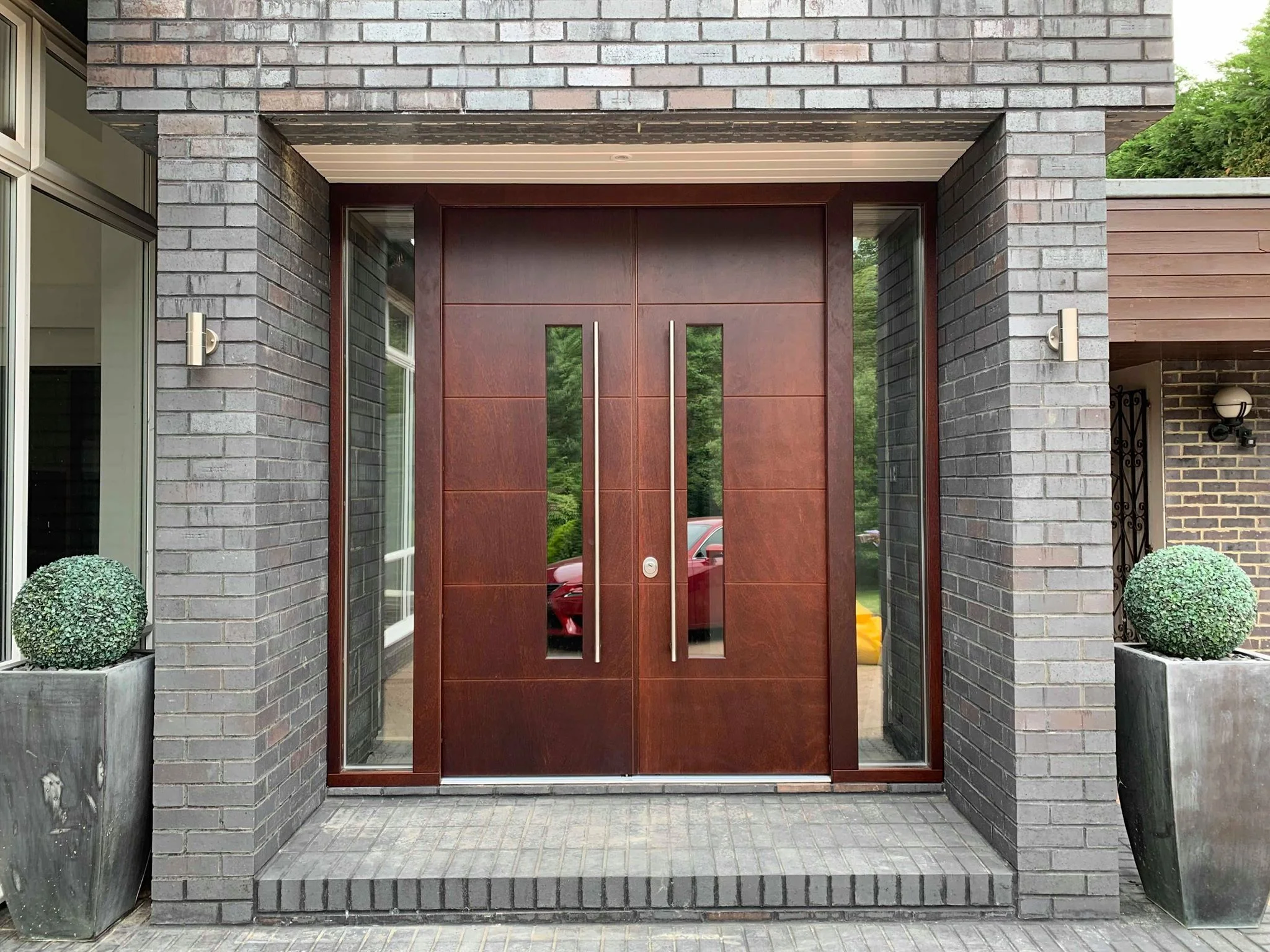
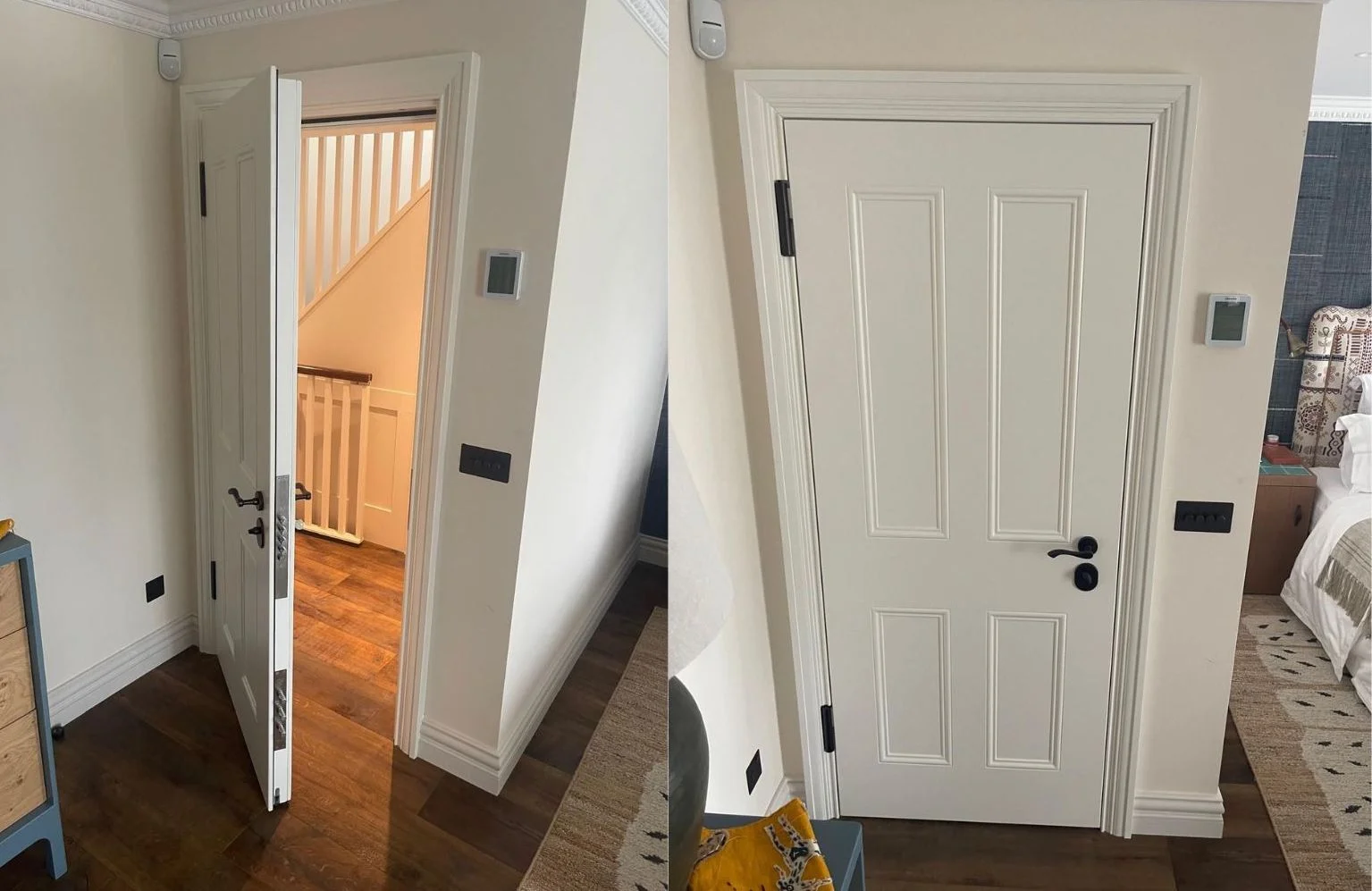
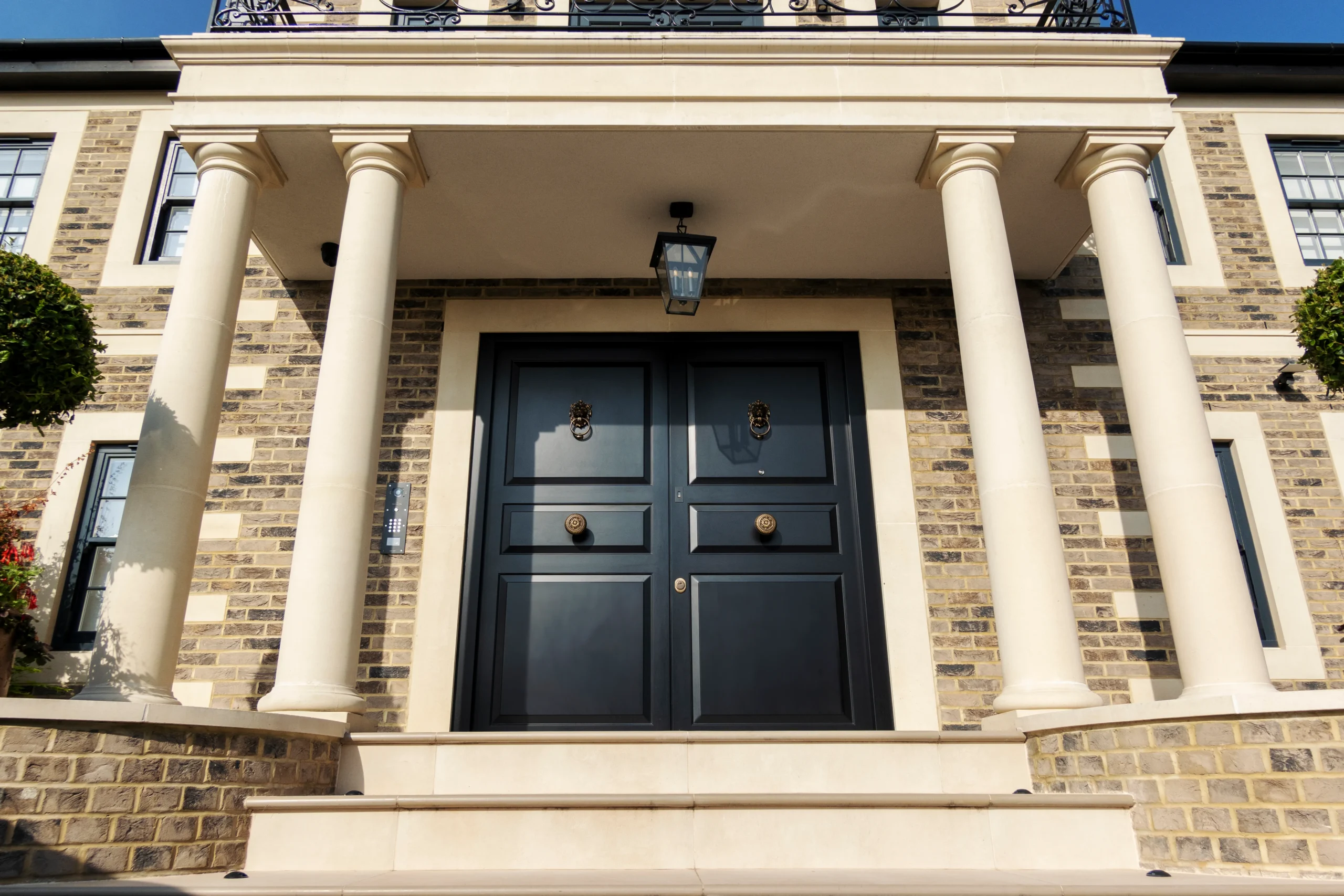
Although steel defines the door’s strength, it does not dictate its appearance. The steel core acts as a structural foundation that allows other materials and finishes to be applied without compromising performance.
This is particularly important in projects where architectural detailing, heritage accuracy, or bespoke design is required. Steel provides the stability needed to support complex door designs while maintaining long-term performance.
For insight into how steel is integrated within our manufacturing process, see How Our Security Doors Are Made
The Security Doors Factory Approach
As a leading UK manufacturer, Security Doors Factory builds every security door around a robust steel structure. We do not sell directly to the public. Instead, we support trade partners, resellers, contractors, developers, and architectural teams with products designed for professional specification.
Our focus is on delivering steel-based security door systems that combine certified performance, durability, and design flexibility.
To view completed projects using steel-based security doors, visit our Security Door Gallery
Conclusion
Steel is the defining material in modern security door construction. Through galvanised mild steel cores, reinforced door leaves, and structural frames, security doors gain the strength required to meet certification, resist attack, and perform reliably over time.
By engineering steel as a complete system rather than a single component, Security Doors Factory delivers security doors that meet professional expectations for performance, longevity, and design adaptability.
Frequently Asked Questions
Steel provides predictable strength, resistance to forced entry, and long-term structural stability. These properties make it essential for certified security door performance.
SDF uses galvanised mild steel for both the door core and frame, providing corrosion resistance and consistent structural performance.
Steel thickness typically ranges between 1.5 mm and 2 mm, depending on the security level and the function of each component within the door assembly.
No. Steel forms the internal structure of the door, allowing a wide range of external finishes and architectural detailing without compromising security.
While standards do not mandate a specific material, steel is widely used because it provides the strength and consistency required to meet forced-entry certification requirements such as LPS 1175.