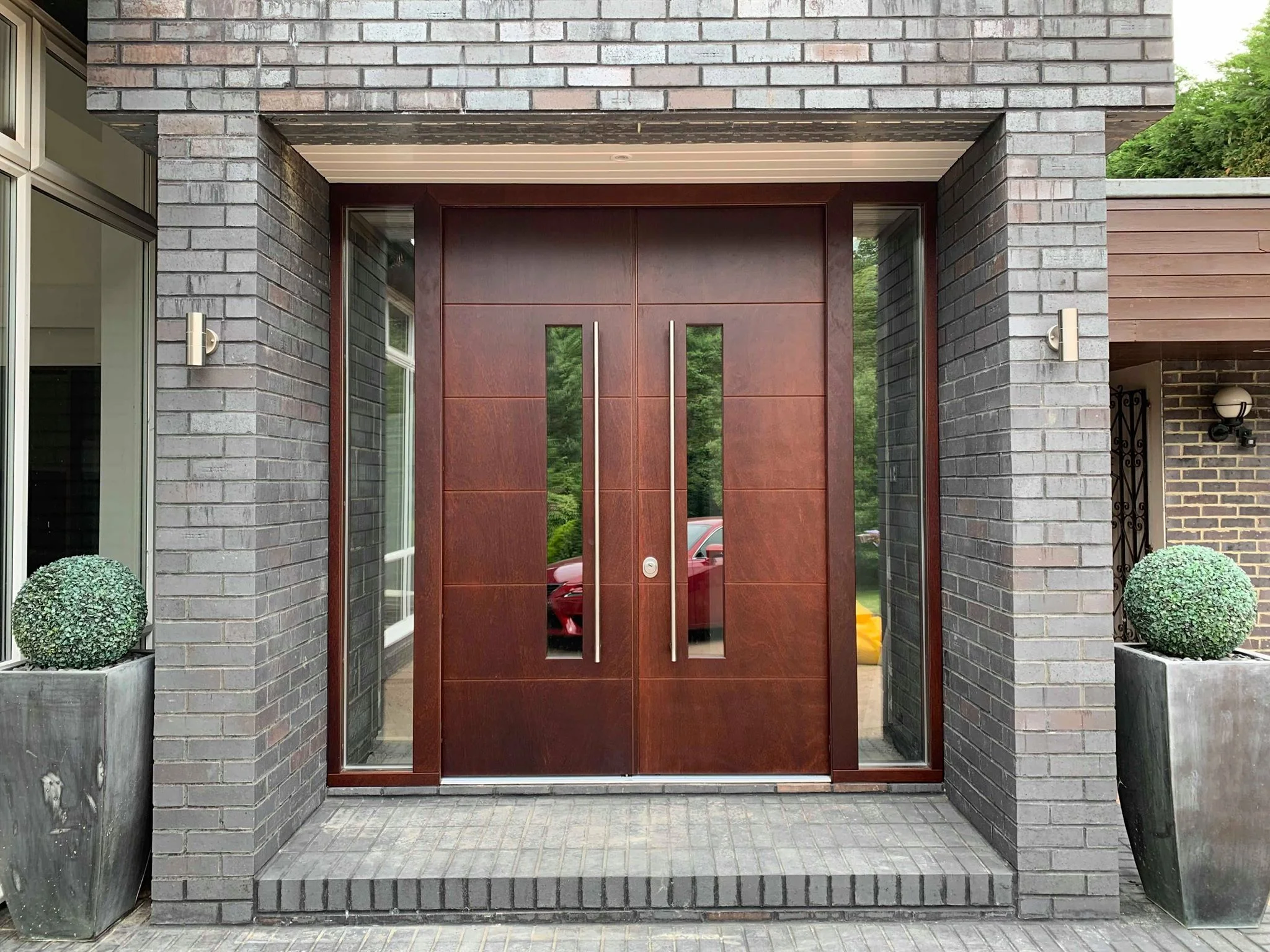
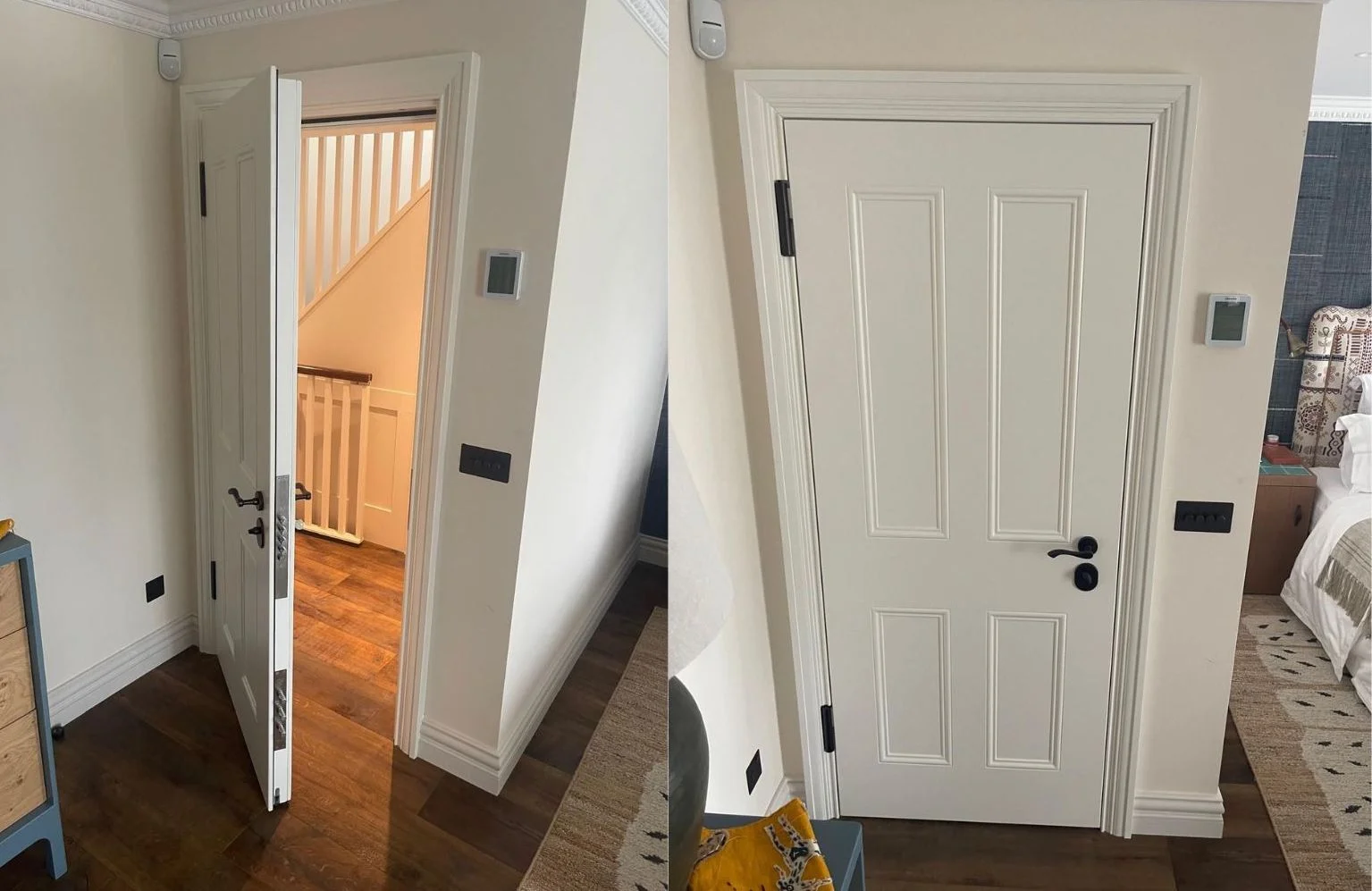
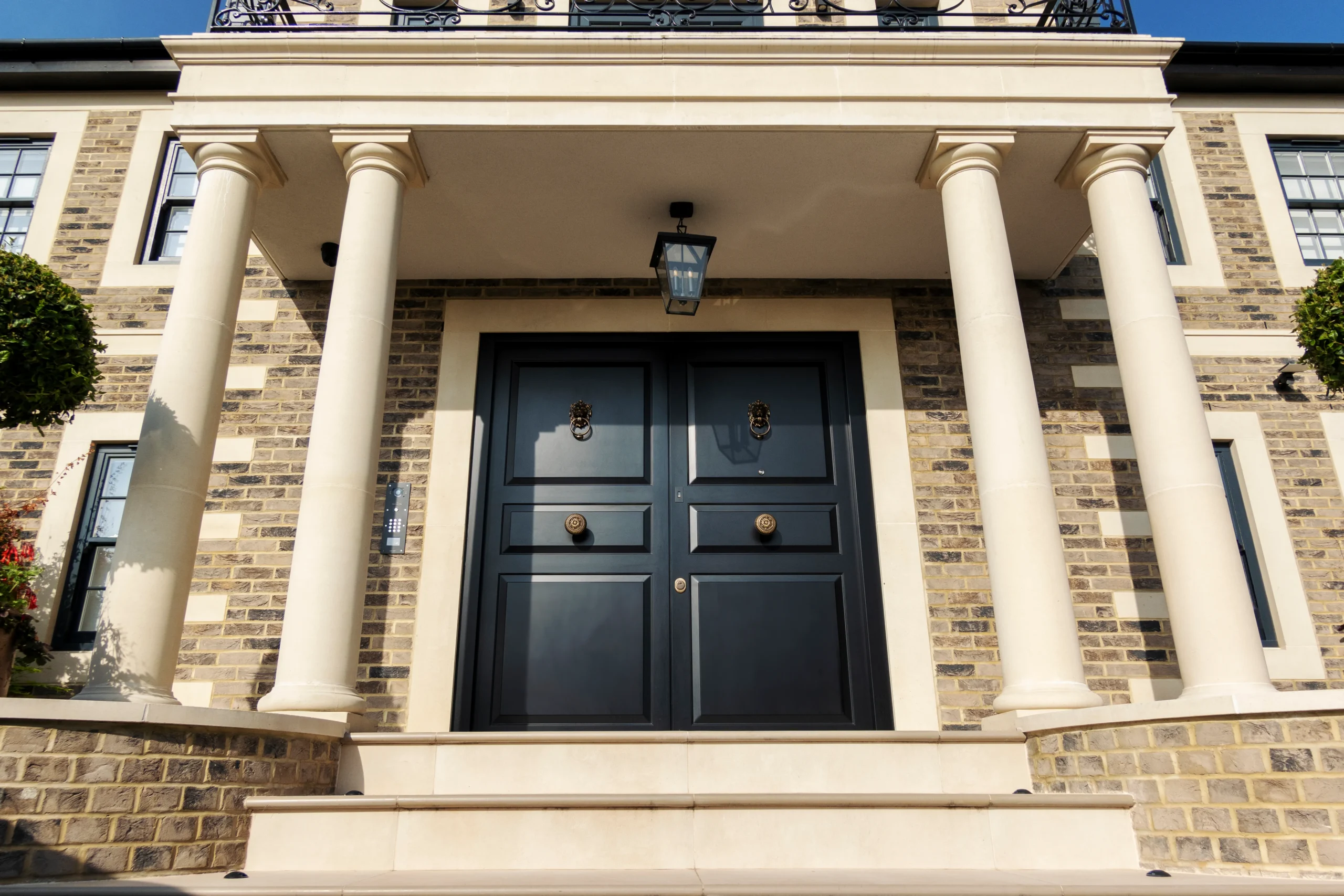
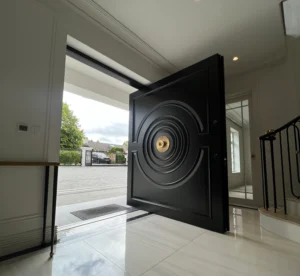
Pivot security doors for luxury developments are becoming an increasingly common feature in high-end residential architecture. Their large proportions, minimalist appearance, and impressive movement create a striking entrance that immediately signals quality and scale.
Unlike conventional side-hung doors, pivot doors rotate on a vertical axis supported by top and bottom pivot hinges. This configuration allows significantly larger and heavier door panels than traditional hinges can support. As a result, pivot entrances are now widely used in modern luxury developments and architect-led residential projects.
For security door manufacturers, however, aesthetics alone are not enough. These oversized doors must combine architectural presence with structural strength, weather resistance, and reliable daily operation.
Why Pivot Doors Are Popular in High-End Architecture
Luxury developments increasingly prioritise dramatic entrance features. Pivot doors allow architects to create wider, taller entrance openings that immediately establish a strong architectural identity.
Because the door rotates on a pivot point rather than side hinges, much of the door’s weight transfers vertically through the floor rather than being carried by hinges on the frame. This makes it possible to construct extremely large doors that still move smoothly.
According to pivot hinge manufacturer FritsJurgens, pivot hinge systems can support doors weighing up to 500 kg, allowing designers to use large materials and substantial door constructions without compromising operation.
For luxury homes, this ability to combine scale with smooth movement is a key reason pivot doors have become a design statement in contemporary architecture.
Structural Engineering Behind Pivot Security Doors
While pivot doors often appear minimalist, their internal structure is typically complex. Large doors require significant reinforcement to maintain rigidity and long-term durability.
At Security Doors Factory, pivot security doors are built on the same reinforced structure used for our Grade 3 security doors, including a galvanised steel door leaf and frame. Additional diagonal steel supports are integrated within the door to provide further structural stability across the oversized panel.
This internal reinforcement prevents twisting or flexing over time and ensures the door maintains correct alignment with the locking system and frame.
You can explore the structural construction of our security doors in How Our Security Doors Are Made
Weather Resistance in Large Pivot Doors
One of the most common challenges with pivot doors is weather sealing. Because the door rotates around an internal pivot point rather than along the edge, achieving consistent weather protection requires careful engineering.
To address this, SDF pivot security doors incorporate a triple rebate sealing system combined with drop-down seals at both the top and bottom of the door. This configuration improves weather resistance and helps maintain insulation performance even with large door panels.
By combining structural reinforcement with advanced sealing systems, pivot doors can achieve both architectural impact and reliable environmental protection.
Effortless Movement with Advanced Pivot Hinges
Large pivot security doors can weigh hundreds of kilograms. Despite this, they must still operate smoothly and comfortably in everyday use.
High-performance pivot hinge systems play a crucial role in achieving this balance. Systems such as those developed by FritsJurgens are installed within the door itself and allow controlled, smooth movement even for extremely heavy door panels.
These concealed hinge systems distribute the door’s weight vertically through the pivot mechanism, enabling large doors to open and close with surprisingly little effort.
For luxury properties where entrance doors may exceed 1500 mm in width, this technology allows substantial security doors to remain easy to operate.
Integrating Modern Access Technology
As with other high-security doors, pivot security doors can incorporate advanced access systems. These may include motorised locking systems, fingerprint readers, keypad entry, or smart access control.
Integrating these technologies directly into the door structure allows security and convenience to coexist with the architectural design.
For developers and luxury resellers, this combination of scale, design flexibility, and advanced security systems provides a compelling product offering.
Supply Through Professional Trade Partners
Security Doors Factory operates exclusively as a manufacturer supplying trade partners. Our pivot security doors are therefore provided to door and window resellers, contractors, and project specialists rather than directly to the public.
This model allows professional installers to coordinate specification, installation, and architectural integration within complex luxury developments.
You can see examples of large architectural doors in our Security Door Gallery
Conclusion
Pivot security doors have become an important feature in luxury residential architecture. Their scale, movement, and visual impact make them ideal for statement entrances in modern developments.
When engineered correctly, pivot doors can combine architectural presence with reinforced security structure, reliable weather protection, and smooth daily operation.
For luxury resellers and project specialists, they represent a growing category where design ambition and advanced security engineering meet.
Frequently Asked Questions
A pivot security door is a reinforced entrance door that rotates on a top and bottom pivot hinge rather than traditional side hinges.
Pivot doors allow architects to design larger and more dramatic entrances while maintaining smooth operation.
Yes. Many pivot security doors are significantly larger than standard doors and can weigh hundreds of kilograms depending on construction.
Yes. They can integrate motorised locks, fingerprint readers, keypad systems, and other smart security technologies.
Manufacturers typically supply them through professional resellers and contractors who coordinate installation in architectural developments.