How security doors are made depends heavily on the type of product being manufactured. A standard steel doorset may follow a relatively fixed production process. However, a fully bespoke security door requires security engineering, precision fabrication, joinery and finishing to come together within one complete system.
At Security Doors Factory, each door begins with an individual project specification rather than a standard catalogue design. The manufacturing process combines a galvanised steel structure with bespoke external finishes, glazing, locking systems and architectural detailing.
This allows our trade partners to offer security doors across very different projects, from traditional residential entrances to contemporary architectural designs.
Design and Engineering Come First
Before manufacturing begins, the design must work both aesthetically and technically.
Our engineering team converts approved designs into detailed production drawings and 3D models. At this stage, we account for the dimensions, steel structure, panel configuration, glazing, locking system, ironmongery and other project-specific requirements.
This is particularly important on architect-led projects. A visually simple entrance can hide considerable engineering behind its finished appearance.
SDF can also exchange CAD and DWG information with architects and project teams. As a result, details such as frame dimensions, fixing positions and construction requirements can form part of the wider project design before manufacturing begins.
CNC Processing the Steel Components
Once the drawings receive approval for manufacture, production moves to the steel workshop.
Galvanised steel forms the structural backbone of our security doors. CNC machinery processes the steel components according to the approved production drawings.
Galvanised steel forms the structural backbone of our security doors. Its zinc coating provides additional protection against corrosion, helping to improve long-term durability. The Galvanizers Association explains how zinc coatings protect steel from environmental exposure.
Our Prima Power machinery punches the required profiles and openings. CNC press brakes then fold the components into their specified forms.
Computer-controlled production gives our engineers considerable flexibility. Instead of adapting a standard-sized door, we can manufacture components specifically for the dimensions and configuration of an individual project.
Welding the Security Door Structure
After cutting, punching and forming, the steel components move into fabrication.
Our welding team uses MIG welding to bring the individual components together and create the door’s structural carcass. This steel construction provides the foundation for the finished doorset.
Importantly, the security does not simply come from adding a stronger lock to a conventional door. The leaf, frame, locking points and other structural components must work together as a system.
This principle also underpins independently tested security doors. Depending on the project requirements, SDF manufactures doors to different security specifications, including LPS 1175 SR3 security doors and higher-security configurations.
Creating the Bespoke Door Design
Once the steel structure takes shape, another major part of the manufacturing process begins: creating its architectural appearance.
For many of our residential security doors, we use MEDITE TRICOYA EXTREME to create the external detailing. We CNC-machine these panels in-house according to each project’s design.
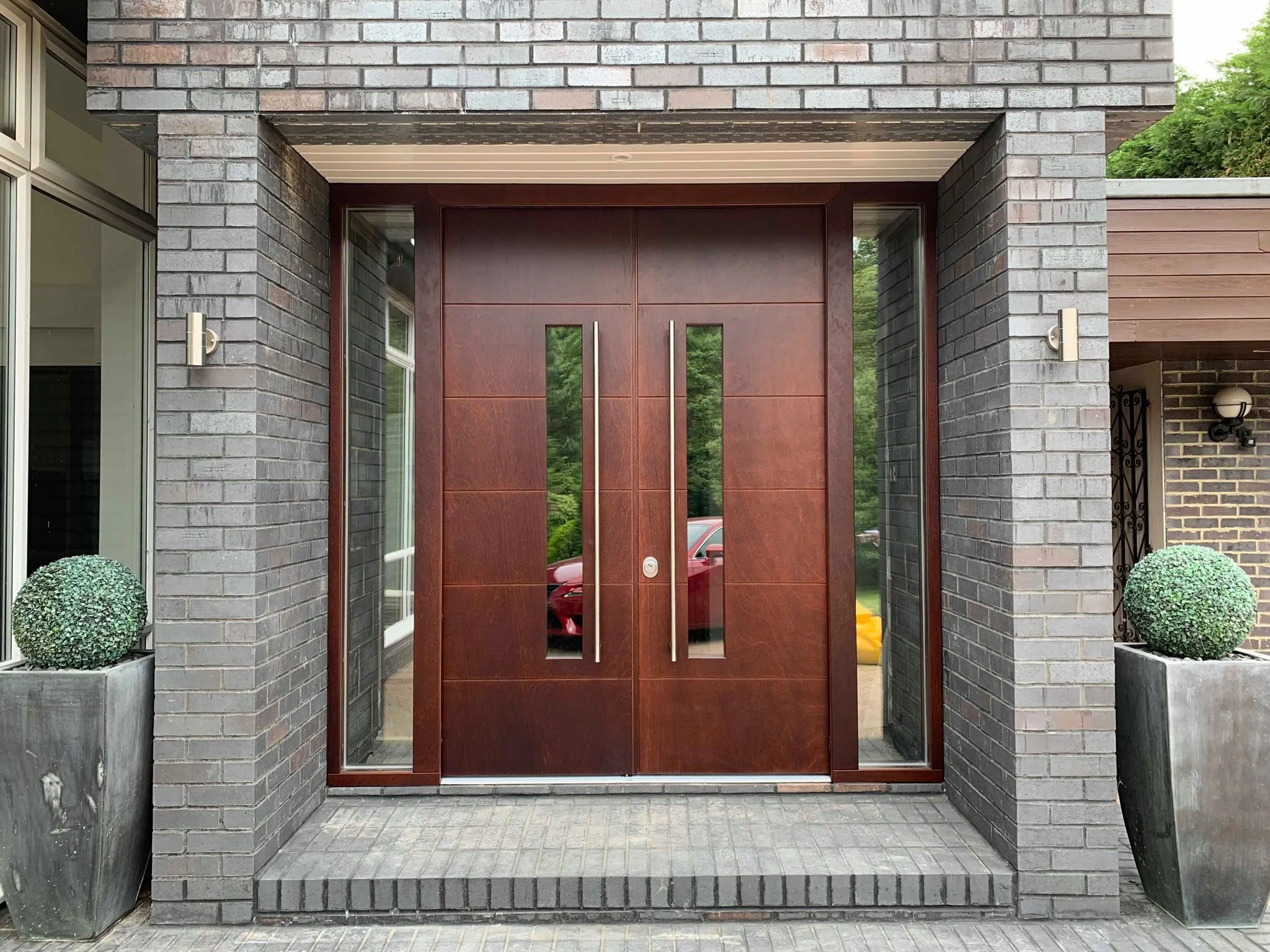
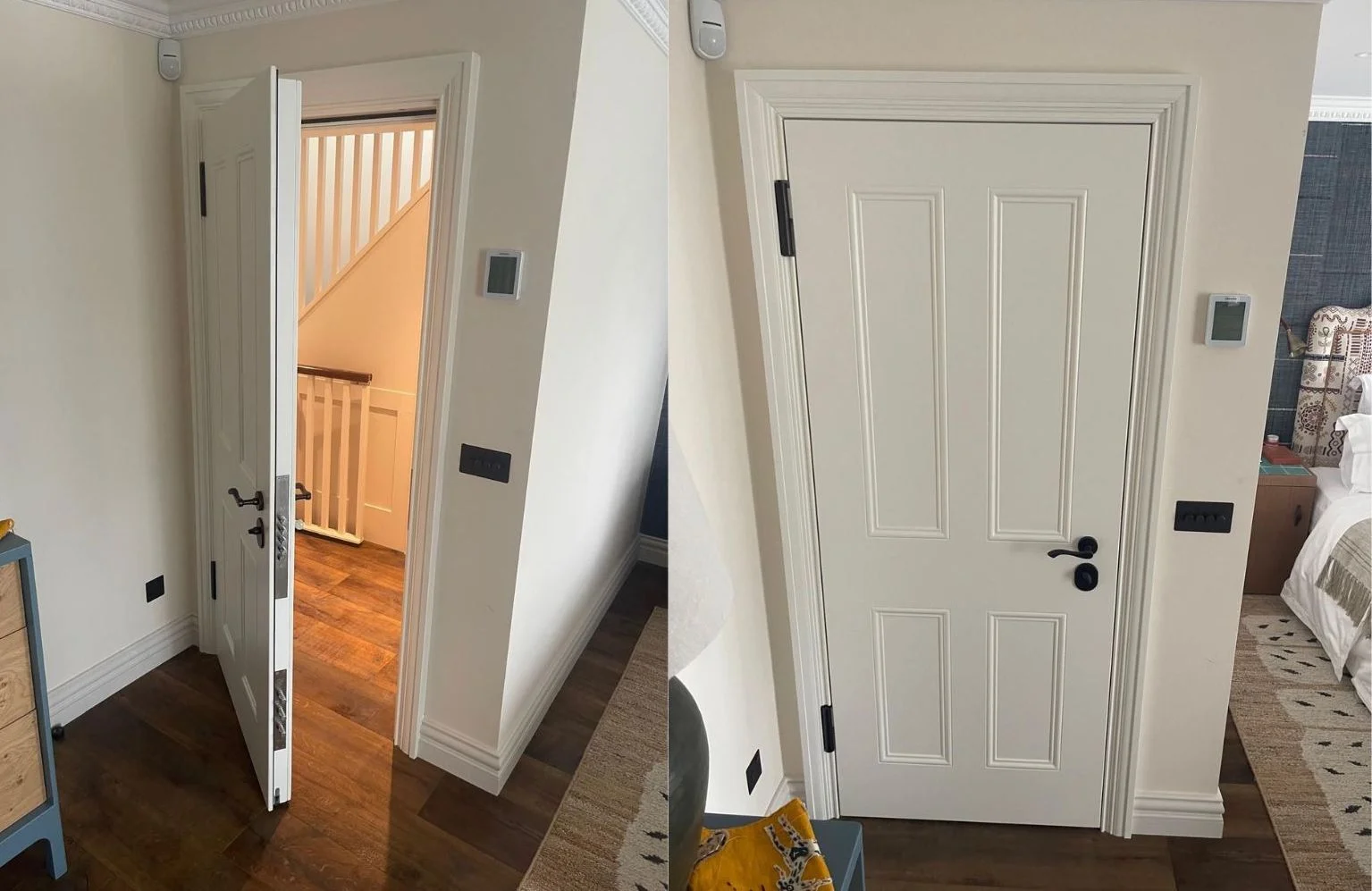
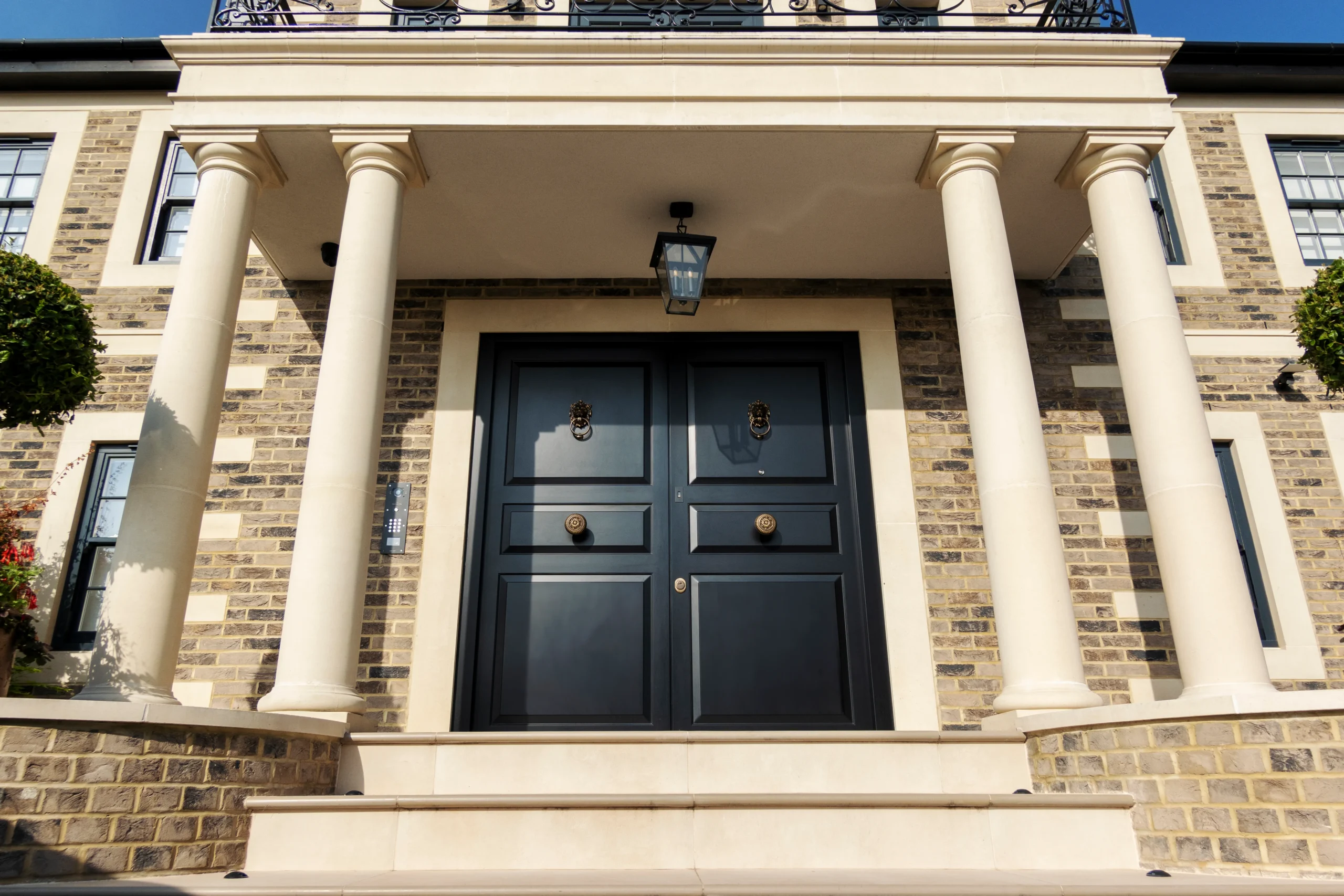
This gives considerably more design freedom than a limited collection of standard door skins. Depending on the brief, we can produce contemporary detailing, traditional mouldings, panel arrangements and more complex architectural designs.
MEDITE describes TRICOYA EXTREME as an engineered wood-based panel with enhanced dimensional stability and durability. Its technical literature also specifies a guarantee of up to 50 years above ground. Medite SmartPly
This combination is fundamental to our approach: steel provides the structural security, while the external panelling provides the architectural freedom.
Hand Preparation, Priming and Finishing
CNC machining is only the beginning of the panel-finishing process.
Once machined, the components require extensive manual preparation. Our team sands and prepares the surfaces and detailing before priming and painting.
This stage is particularly labour-intensive. Complex mouldings, edges and recessed details require careful preparation to achieve the required finish.
We carry out the spraying process in-house under controlled conditions. Depending on the specification, doors can receive different colours, sheen levels and finishes to complement the wider architectural scheme.
This combination of CNC manufacturing and manual craftsmanship is especially important on bespoke projects. Machinery provides accuracy, while experienced preparation and finishing create the final appearance.
Locks, Glazing and Ironmongery Are Integrated
The next stage brings the individual elements together into a complete doorset.
Our team installs the locking system, hinges, glazing where specified, seals and selected ironmongery. Projects can also incorporate electronic access systems such as fingerprint readers, keypads and motorised locking.
However, these components do not operate independently from the door construction. Their positions and requirements form part of the engineering process from the beginning.
That becomes particularly important on unusual doors involving oversized glazing, specialist security requirements or complex access-control systems.
Final Assembly and Quality Control
Before a completed security door leaves the factory, our team assembles and checks the complete system.
We recheck individual components, dimensions, alignment, ironmongery and finishes. The team also operates the complete locking system and checks the movement and function of the doorset.
Where the specification includes electronic access control, we test its operation as part of the final checks.
Only after the complete assembly has passed these checks does the door move to packing and preparation for delivery.
Why In-House Manufacturing Matters for Bespoke Security Doors
Bespoke security doors bring together several disciplines that would otherwise sit with different suppliers.
Steel fabrication affects the structure. Joinery determines the architectural detailing. Locking and glazing influence security. Meanwhile, finishing determines whether the final product delivers the appearance expected on a high-end residential project.
Keeping these processes closely connected gives our team control over how the individual components interact.
It also gives our trade partners greater flexibility when working with architects and clients. Rather than choosing from a fixed catalogue, they can approach SDF with a design brief and develop the appropriate door around the project.
That distinction is particularly relevant at the high end of the market, where clients may approach a reseller because of the design they want rather than because they originally set out to purchase a security door.
Bespoke Design with Security Built Into the Structure
Understanding how security doors are made also explains why two visually similar entrance doors can be fundamentally different products.
At SDF, security begins inside the structure. The galvanised steel construction, frame, locking system and other security components create the underlying doorset. Bespoke panelling, glazing, ironmongery and finishing then allow that structure to take on the architectural appearance required for the project.
The result does not need to look like a conventional security door.
For our reseller network, that creates opportunities across both security-led and design-led projects. Explore examples of completed designs in the Security Doors Factory gallery.
Frequently Asked Questions
Security doors typically combine a strong door leaf and frame with appropriate locking, hinges and hardware. At SDF, we manufacture the structural door from galvanised steel before adding project-specific panels, glazing, ironmongery and finishes.
Not necessarily. Different steel components work together to create the structural doorset. SDF then combines this steel construction with insulation, bespoke external panelling, glazing and other components according to the specification.
Yes. The structural security components do not dictate the finished architectural style. CNC-machined panels and bespoke joinery allow SDF to produce traditional, heritage-inspired and contemporary designs around the underlying steel structure.
Its durability, dimensional stability and machining characteristics make it particularly suitable for detailed exterior applications. MEDITE’s own technical literature specifies a guarantee of up to 50 years for above-ground applications.
Yes. SDF carries out design and engineering, CNC steel processing, welding, CNC panel machining, preparation, spraying and assembly at its manufacturing facility. Keeping these processes together also allows greater control over bespoke projects.